
To guarantee winter pool safety, start by inspecting and repairing your pool cover to prevent tears and debris buildup. Keep the cover tightly secured and check it regularly after storms. Install outdoor lighting along pathways and around the pool area to prevent slips and enhance safety during shorter daylight hours. Protect electrical fixtures from moisture, and address any electrical issues promptly. Proper winter preparation minimizes hazards and helps you enjoy peace of mind during the colder months. Keep going to learn more tips for a safe, winter-ready yard.
Key Takeaways
- Inspect and repair the pool cover to ensure it is free of tears, securely anchored, and free of debris before winter.
- Regularly check outdoor lighting for proper operation, replacing bulbs and fixtures to maintain visibility and safety.
- Keep electrical connections dry, protected, and properly maintained to prevent hazards from moisture or snow exposure.
- Remove leaves, dirt, and debris from the pool area and cover to prevent deterioration and safety hazards.
- Install motion-activated or solar-powered lights along pathways and around the pool for improved safety during shorter winter days.
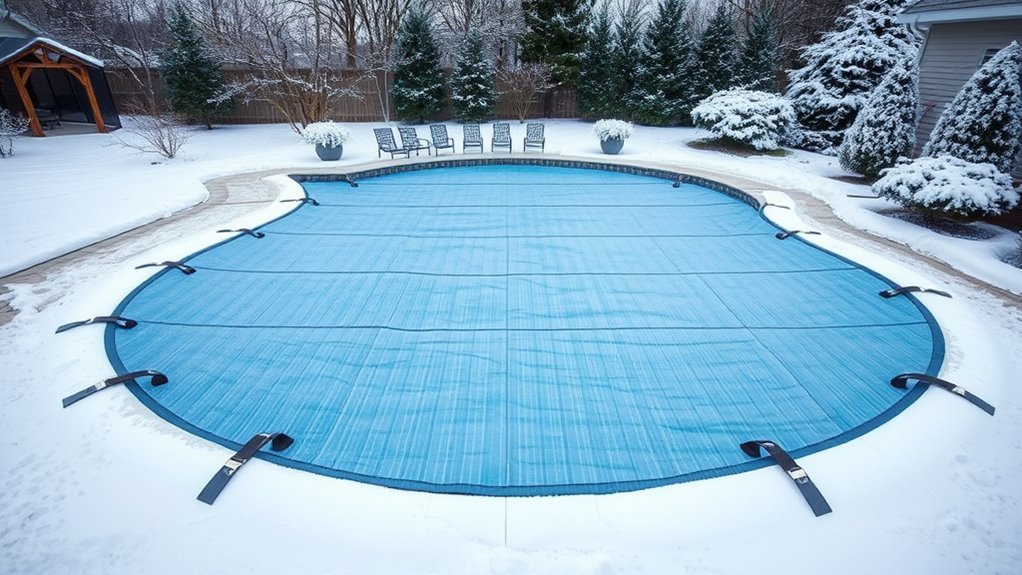
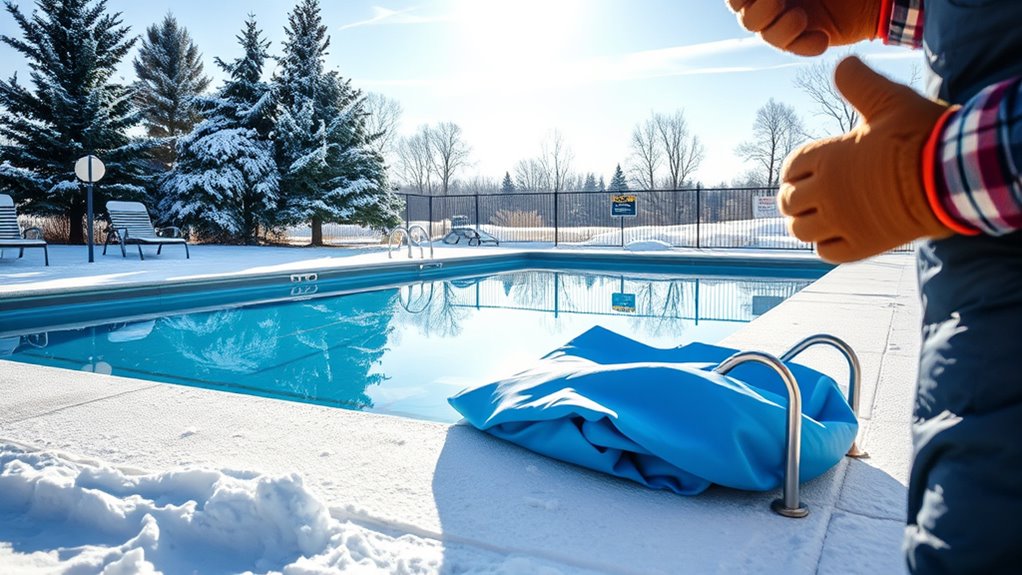
As winter approaches, it’s indispensable to remember that pool safety doesn’t end with the warmer months. Preparing your pool and yard for the colder season involves several critical steps, especially when it comes to protecting your investment and ensuring safety for everyone. One of the most important tasks is pool cover maintenance. If you have a cover, make sure it’s in good condition—no tears, holes, or signs of wear. A damaged cover won’t effectively keep debris out or prevent accidental falls, which can pose safety risks. Before covering your pool, remove any remaining leaves, dirt, or debris from the surface and around the edges. This prevents buildup that can cause algae growth or stains once the cover is in place. Secure the cover tightly, ensuring it’s properly anchored so it won’t shift or blow off during storms. Regularly inspect the cover throughout winter, especially after heavy winds or snow, to confirm it remains secure and intact. Proper pool cover maintenance not only keeps your pool clean but also minimizes hazards by preventing accidental entries.
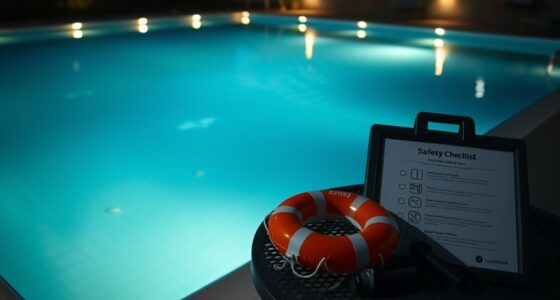
In addition to the cover, outdoor lighting plays an essential role in winter pool safety. Shorter daylight hours mean you should guarantee all outdoor lighting fixtures are functioning properly. Adequate lighting helps you navigate your yard safely, avoiding icy patches, fallen branches, or other obstacles. Consider installing motion-activated or solar-powered lights along pathways, around the pool area, and near steps or uneven surfaces. These lights improve visibility during the dark winter months, reducing the risk of slips and falls. If your existing outdoor lighting is outdated or malfunctioning, replace bulbs or fixtures promptly. Keep electrical connections dry and protected from snow and moisture, which can cause shorts or other hazards. Well-lit outdoor spaces not only enhance safety but also make your yard more inviting for winter visits or outdoor activities, even during the colder months.
Frequently Asked Questions
When Should I Drain My Pool for Winter?
You should drain your pool when temperatures consistently stay below freezing, typically in late fall before installing your winter pool cover. Before draining, guarantee your pool chemical balance is properly maintained to prevent algae growth and damage. However, many pools only need partial draining or winterizing instead of full drainage. Always follow manufacturer instructions and local regulations, and consider consulting a professional to avoid damaging your pool or equipment.
How Do I Prevent Ice Damage to My Pool Equipment?
To prevent ice damage to your pool equipment, you should winterize properly by insulating your equipment and plumbing. This prevents ice expansion from cracking pipes or damaging the pump. You can use foam covers or insulation sleeves to protect the equipment. Additionally, make certain the water level is low enough to prevent freezing, and consider using a pool cover to keep out snow and ice. Proper insulation and winterization are key to avoiding costly repairs.
What Should I Do if My Pool Freezes Over?
If your pool freezes over, you should act quickly to prevent damage. Remove any ice formation carefully to avoid cracking the surface. Use a pool cover or pool insulation to help protect against further ice buildup. Keep a small submersible pump running to circulate water, reducing ice formation. If damage occurs, consult a professional for repairs. Taking these steps can minimize risks and protect your pool’s integrity during freezing temperatures.
How Often Should I Check My Pool Cover During Winter?
You should check your pool cover at least once a month during winter to guarantee it remains secure. Regular cover inspection is essential as part of your winter maintenance routine. Look for any signs of damage, debris buildup, or water pooling that could stress the cover. Keeping an eye on it helps prevent issues like tearing or collapsing, ensuring your pool stays protected and ready for use when spring arrives.
Can I Leave Pool Toys and Accessories Outside?
You shouldn’t leave pool toys and accessories outside during winter. Instead, store pool toy storage indoors or in a dry, protected area to prevent damage from the cold and moisture. Regular outdoor accessory maintenance is essential to avoid mold, rust, or deterioration. Keeping your toys and accessories safely stored helps prolong their lifespan and keeps your yard tidy, making it easier to enjoy your pool when warm weather returns.
Conclusion
While winter’s chill may keep you from dreaming of poolside lounging, neglecting safety can turn your peaceful retreat into a hidden hazard. Ironically, the coldest months demand your attention the most—covering, securing, and inspecting diligently. So, as you brace for the frosty months, remember: a well-prepared pool isn’t just about summer fun, but about avoiding winter’s silent, icy surprises. Stay vigilant now, or risk an unexpected splash of trouble when spring finally arrives.