Maintaining total alkalinity between 80 and 120 ppm is vital because it buffers your pool’s pH, keeping water balanced and preventing sudden fluctuations. Proper alkalinity helps guarantee clear water, minimizes scaling, and protects your equipment from damage. If alkalinity falls outside this range, water can become corrosive or cloudy, making your pool less inviting and harder to manage. Stay tuned to discover how monitoring and adjusting alkalinity can keep your pool safe and pristine.
Key Takeaways
- Maintaining alkalinity between 80–120 ppm stabilizes pH and prevents fluctuations that can cause water imbalance.
- Proper alkalinity levels protect pool equipment from corrosion, scaling, and mineral deposits.
- Balanced alkalinity ensures consistent water clarity and reduces cloudy water issues.
- It enhances sanitizer efficiency, promoting safer and healthier swimming conditions.
- Regular monitoring and adjusting alkalinity helps prevent costly repairs and prolongs pool lifespan.
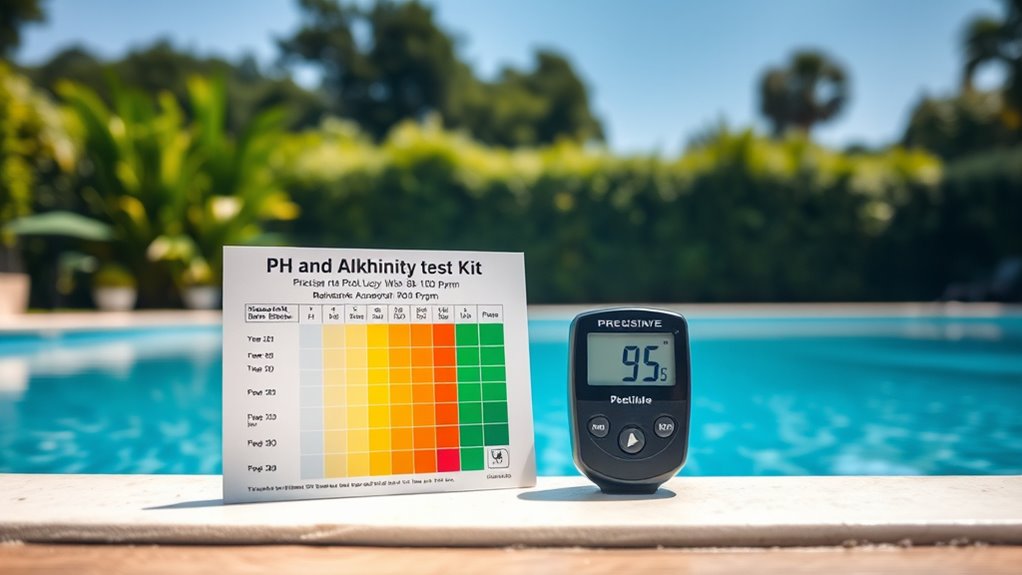
Maintaining balanced total alkalinity is essential for guaranteeing your pool’s water stays safe, clear, and properly buffered. When alkalinity levels are within the ideal range of 80–120 ppm, you help stabilize the pH, preventing it from fluctuating wildly. pH stability is vital because it directly impacts swimmer comfort, equipment longevity, and water clarity. If alkalinity drops too low, your pH can become highly volatile, leading to frequent imbalances and potential damage to pool components. Conversely, overly high alkalinity can cause the pH to drift upward, resulting in cloudy water and scaling issues. Keeping alkalinity within this range acts as a buffer, absorbing minor pH changes and maintaining consistent water chemistry. Proper alkalinity levels also help protect pool equipment from corrosion and scaling, ensuring longevity and optimal performance. Your mineral balance is also closely tied to total alkalinity. When alkalinity levels are correctly maintained, minerals like calcium and magnesium stay in proper suspension, reducing the risk of deposits on pool surfaces and equipment. Proper mineral balance ensures that your water remains smooth, without roughness or film buildup, which can happen when minerals precipitate out of solution due to imbalanced pH levels. This equilibrium supports not only water clarity but also the efficiency of your sanitizers and other chemicals, which function best within ideal pH and alkalinity ranges. If alkalinity is too high, minerals tend to come out of solution more readily, leading to cloudy water and scaling. Too low, and minerals may not be properly buffered, making your water more aggressive and prone to corrosion. Achieving the right alkalinity level requires regular testing and adjustments. Use a reliable test kit to monitor your levels weekly, especially during heavy usage or after chemical treatments. If your alkalinity is below 80 ppm, you’ll want to add a buffering agent such as sodium bicarbonate (baking soda) to raise it gradually. If it’s above 120 ppm, you’ll need to lower it using acids like muriatic acid or sodium bisulfate. Always add chemicals slowly and in small increments, allowing time for the water to circulate and stabilize before retesting. This careful approach prevents overshooting your target range and guarantees your pH remains stable, providing a comfortable swimming environment and protecting your pool’s infrastructure. Consistent monitoring of alkalinity levels is key to avoiding fluctuations that could compromise water quality. In short, maintaining total alkalinity within the 80–120 ppm range supports pH stability and preserves mineral balance, which are critical for a healthy, inviting pool. Regular testing and precise adjustments are your best tools for keeping water chemistry in check, avoiding common issues such as cloudy water, scaling, or corrosion. By paying attention to alkalinity, you create a balanced environment that’s safer, clearer, and easier to maintain, making your pool a more enjoyable and trouble-free retreat.
Frequently Asked Questions
How Often Should I Test My Pool’s Alkalinity Levels?
You should test your pool’s alkalinity levels at least once a week to guarantee proper alkalinity maintenance. Regular testing helps you catch fluctuations early, preventing issues like corrosion or cloudy water. If you notice your alkalinity drifting outside the ideal range of 80–120 ppm, adjust it promptly. During heavy use or after adding chemicals, test more frequently to keep your pool water balanced and safe for swimming.
Can High Alkalinity Cause Cloudy Water?
Yes, high alkalinity can cause water cloudiness. An alkalinity imbalance leads to scale buildup and reduces your water’s clarity. When alkalinity exceeds the recommended range of 80–120 ppm, it can make your pool water appear dull and murky. To prevent water cloudiness, you should regularly test and adjust your alkalinity levels, ensuring they stay within the ideal range for clear, healthy water.
What Chemicals Are Used to Adjust Alkalinity?
You use alkalinity increasers like sodium bicarbonate or sodium carbonate to adjust your pool’s alkalinity. These chemicals help raise alkalinity levels during chemical balancing, preventing issues like corrosion or cloudy water. When levels are too high, acids like muriatic acid or sodium bisulfate lower alkalinity. Always add chemicals gradually and test frequently to maintain a balanced, safe swimming environment.
How Does Alkalinity Affect Ph Stability?
Alkalinity plays a vital role in pH buffering, helping water resist sudden pH changes and maintain stability. When alkalinity is within 80–120 ppm, it effectively buffers pH fluctuations, ensuring your water chemistry stays balanced. If alkalinity is too low, pH can swing wildly, causing potential damage. Conversely, high alkalinity can lead to overly stable but sluggish pH adjustments. Maintaining proper alkalinity keeps your water chemistry steady and predictable.
Is It Safe to Swim With High Alkalinity Levels?
Swimming with high alkalinity levels isn’t inherently unsafe, but it can cause issues like cloudy water and skin irritation. Your alkalinity measurement helps you determine if chemical adjustments are necessary to keep the water balanced. If levels exceed 120 ppm, you should lower them to prevent these problems. Always monitor and adjust alkalinity carefully to ensure a safe, comfortable swimming environment for everyone.
Conclusion
Think of your pool’s alkalinity like a steering wheel—you need it balanced between 80-120 ppm to steer smoothly. I once saw a pool where alkalinity was too high, and it was like trying to steer a boat with a heavy anchor—hard to control. Keeping alkalinity within this range guarantees your water stays clear and balanced, making your swimming experience effortless. Don’t let imbalance steer you off course; stay within the ideal ppm range.