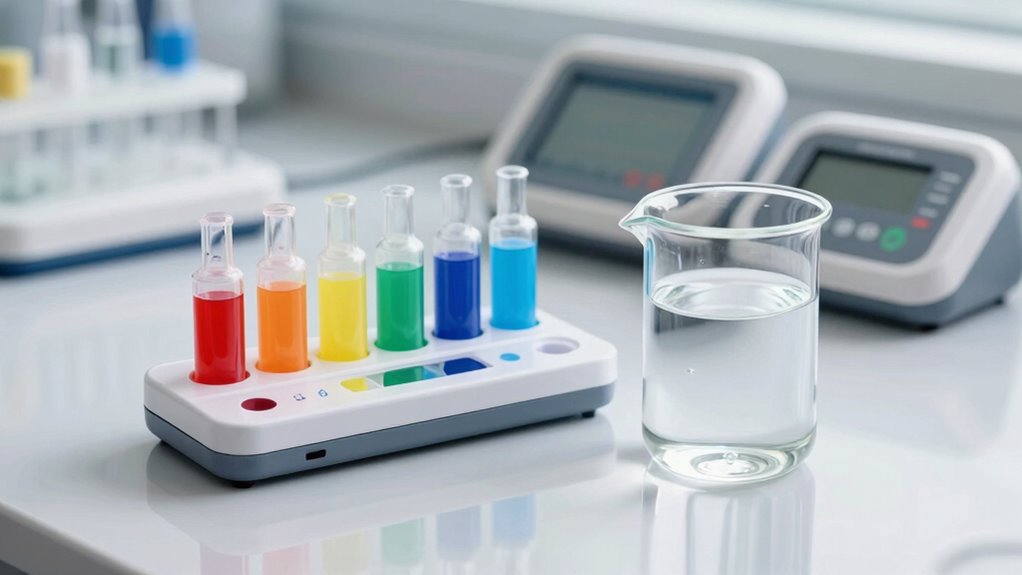

Start by testing your water chemistry thoroughly to know where you stand. Next, adjust the pH to guarantee ideal effectiveness of other chemicals. Then, manage mineral levels like calcium hardness to prevent scaling or corrosion. Once those are stable, balance the alkalinity, and finally, add sanitizers and stabilizers. Following this sequence makes water balancing easier and more efficient. Keep going to discover detailed steps that will help you maintain perfect pool water with less hassle.
Listen free for 30 days with Audible
Thousands of audiobooks and originals — cancel anytime.
As an affiliate, we earn on qualifying purchases.
Key Takeaways
- Test all water parameters thoroughly before making any adjustments.
- Adjust pH first, then re-test before proceeding to mineral levels.
- Balance mineral levels early to prevent scaling and corrosion issues.
- Fine-tune alkalinity after stabilizing pH and minerals.
- Complete water balancing with sanitizers once foundational elements are stable.
Balancing water in your pool can feel overwhelming, but following the right order makes the process much simpler. The key is understanding that some adjustments need to come before others to guarantee your water remains safe, clear, and comfortable. When you start, your first step should be to test the water thoroughly. Use a reliable test kit to check pH, alkalinity, calcium hardness, and mineral levels. Knowing these numbers helps you determine what needs attention first.
Once you’ve tested the water, your initial focus should be on pH adjustment. pH influences how well other chemicals work and impacts swimmer comfort. If the pH is too low, add a pH increaser; if it’s too high, use a pH reducer. Adjusting pH first assures that other chemicals, like sanitizers and algaecides, will function properly. It’s best to let the water circulate for a few hours after adjusting pH to get an accurate reading before proceeding.
Adjust pH first for proper chemical balance and swimmer comfort; wait a few hours before testing again.
Next, you should look at mineral levels, especially calcium hardness and any other minerals present. High mineral levels can cause scaling and cloudiness, while low levels might lead to corrosion. If minerals are out of balance, add the appropriate mineral control agents or adjust the levels according to manufacturer instructions. Addressing mineral levels early is vital because they impact water clarity and equipment longevity. Understanding water chemistry helps you make more informed adjustments and avoid common issues. Additionally, maintaining balanced mineral levels can contribute to a more sustainable water management routine, reducing the need for excessive chemical use.
After pH and mineral levels are settled, you can focus on alkalinity. Proper alkalinity helps stabilize pH and prevents rapid fluctuations. If alkalinity is off, add alkalinity increasers or decreasers as needed, then recheck after circulation. Once these foundational elements are balanced, you can move on to sanitizers, stabilizers, and other chemicals, knowing that your water chemistry is stable enough to handle them.
As an affiliate, we earn on qualifying purchases.
Frequently Asked Questions
What Tools Are Essential for Water Balancing?
You need vital tools like chemical testing kits to accurately measure your water’s pH, alkalinity, and sanitizer levels. These tools help you identify what adjustments are necessary, making water balancing straightforward. pH adjustments are essential, so having chemicals like pH increasers or decreasers on hand guarantees you can correct imbalances quickly. Regular testing and adjustments keep your water safe, clear, and balanced, preventing potential issues before they escalate.
How Often Should Water Balance Be Checked?
You should check your water balance weekly to guarantee chemical levels and pH adjustment stay in ideal ranges. Regular testing helps you catch imbalances early, preventing issues like cloudy water or equipment damage. During each check, measure chemical levels such as chlorine, alkalinity, and calcium hardness. Adjust the pH as needed to maintain proper pH balance, making your pool safer and more enjoyable. Consistency is key to hassle-free water balancing.
Can Water Balancing Be Done Without Professional Help?
Picture yourself as a skilled gardener tending delicate plants. You can perform water balancing with DIY solutions and chemical alternatives, but it’s not always straightforward. While some pool owners successfully manage basic adjustments, complex balancing requires professional help to avoid damage. If you’re confident and cautious, you can try simple tests and treatments, but remember, precision often demands expert guidance to keep your pool healthy and safe.
What Are Common Signs of Improper Water Balance?
If your pool chemistry is off, you’ll notice signs like cloudy water, algae growth, or skin and eye irritation. Improper water balance often causes pH levels to fluctuate or chlorine to become ineffective. Regular water testing helps you catch these issues early. By maintaining proper water chemistry, you guarantee a safe, clear, and inviting pool. Keep testing your water frequently and adjust chemicals as needed for best balance.
How Does Water Temperature Affect Balancing Procedures?
Think of your pool like a delicate dance—water temperature influences the steps. When water heats up or cools down, chemical interactions shift, making balancing more challenging. Temperature fluctuations can cause pH and sanitizer levels to become unstable, requiring you to adjust chemicals more frequently. By maintaining a consistent temperature, you prevent erratic chemical reactions, making water balancing easier and more effective, ensuring your pool stays crystal clear and inviting.
Conclusion
By following the right order in water balancing, you simplify the entire process and achieve better results faster. Remember, neglecting proper steps can lead to imbalanced water chemistry, causing issues like cloudy water or algae growth. Did you know that improper water balancing can increase chemical costs by up to 25%? Staying organized and following the correct sequence not only saves you time and money but also guarantees a safe, crystal-clear pool for everyone to enjoy.
NFL season / tailgating Picks
team gear
As an affiliate, we earn on qualifying purchases.