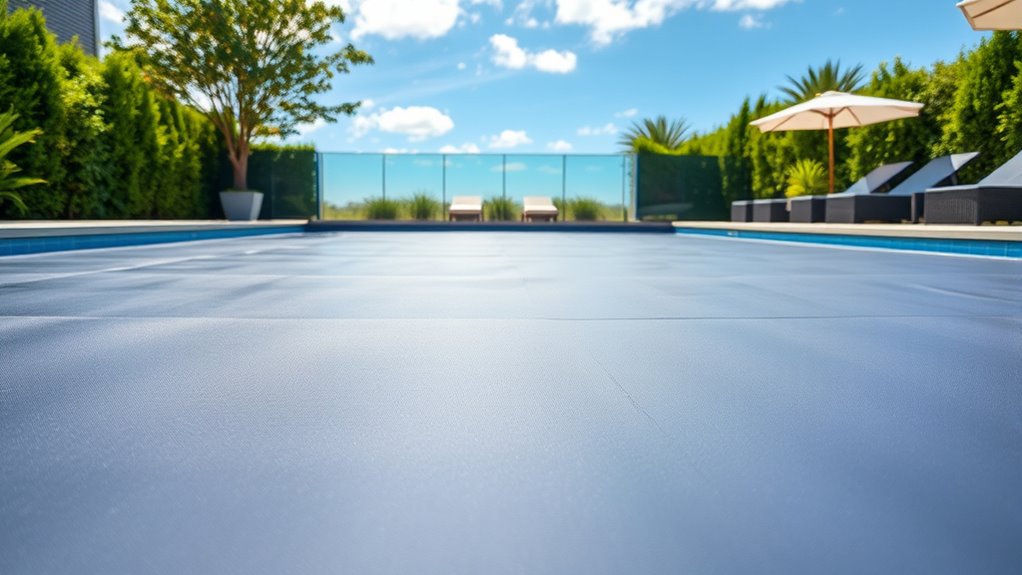

Using a pool cover consistently helps you cut down on maintenance and water loss. It traps debris, keeping your pool cleaner and reducing the time needed for skimming and chemical balancing. Plus, covers minimize evaporation, meaning you’ll use less water and chemicals over time. They also help retain heat, lowering energy costs. If you want to discover more ways to make your pool easier and more efficient to care for, keep exploring these smart solutions.
Key Takeaways
- Pool covers block debris, reducing cleaning needs and minimizing filter strain.
- They significantly decrease water evaporation, conserving water and lowering refill costs.
- Covers help maintain consistent water temperature, reducing energy use for heating.
- Using covers lessens chemical loss, decreasing chemical consumption and balancing efforts.
- Regular cover use extends equipment lifespan by protecting pool components from damage.
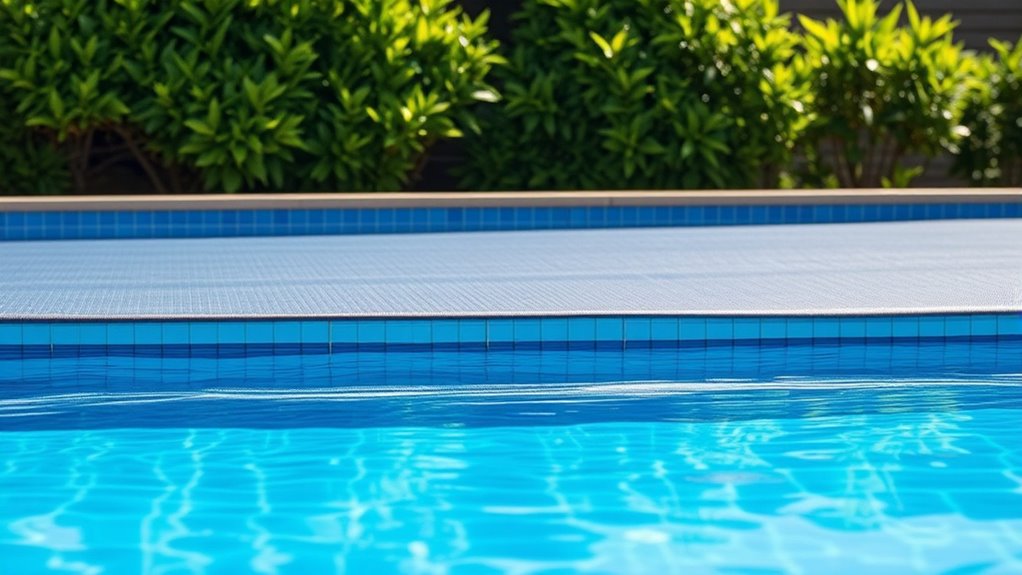
A pool cover is an essential accessory that helps you maintain your pool’s cleanliness, safety, and temperature. When you invest in a high-quality cover, you’re not just shielding your pool from debris; you’re also making it more energy-efficient and safer for everyone. One of the key advantages of using a pool cover is its ability to retain heat, which can greatly reduce your energy costs. If you want to extend your swimming season or keep the water warm without constantly running your heater, solar heating combined with a cover is a smart choice. Solar covers absorb sunlight during the day, warming the water naturally, and then trap that heat overnight, making your pool more inviting without extra energy expenses. This synergy between solar heating and a cover means you get to enjoy warm water longer, while also cutting down on energy consumption.
Beyond temperature control, a pool cover acts as a crucial safety barrier, especially if you have children or pets. An uncovered pool can be tempting but dangerous, and a cover provides an added layer of protection, preventing accidental falls. Some covers are designed specifically as safety barriers, capable of supporting weight or acting as a secure barrier that children or pets can’t easily bypass. This peace of mind allows you to relax knowing that your loved ones are safer when the pool isn’t in use. Additionally, safety covers can hold debris on top, preventing dirt, leaves, and insects from contaminating the water, which reduces the frequency of cleaning and chemical balancing. Proper use of a pool cover also helps conserve water and chemicals, reducing environmental impact and ongoing costs.
Using a pool cover also dramatically cuts down on evaporation, which is a major cause of water loss and chemical imbalance. When the pool is covered, less water escapes into the air, meaning you don’t have to refill it as often. This not only conserves water but also saves you money on chemicals and maintenance. It’s a simple yet effective way to keep your pool pristine while reducing ongoing costs. Furthermore, the less debris that enters your water, the less strain on your filtration system, helping it last longer and work more efficiently. The more consistent your pool’s cleanliness and temperature, the less time and effort you’ll spend maintaining it, freeing you up to enjoy more time swimming or relaxing poolside.
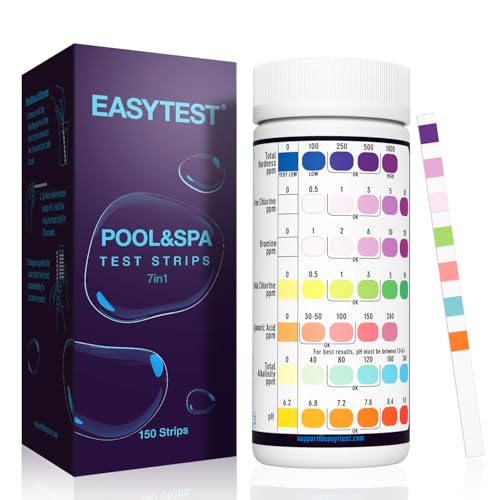
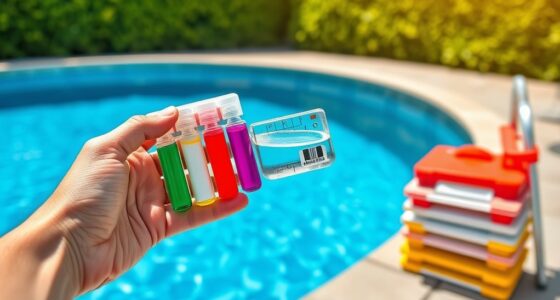
EASYTEST 7-Way Pool Test Strips, 150 Strips Water Test for Hot tub and Spa
- 150 Test Strips Included: Enough for frequent water testing
- Quick and Accurate Results: Soak for 1 second, read in 15 seconds
- 7-in-1 Water Testing: Measures Bromine, pH, Chlorine, and more
As an affiliate, we earn on qualifying purchases.
Frequently Asked Questions
How Do Pool Covers Affect Algae Growth?
Pool covers help prevent algae growth by blocking sunlight, which algae need to thrive. They also keep debris out, reducing the chance of algae spores entering your pool. Regular cover maintenance is essential to make sure it stays clean and effective. By using a cover consistently, you minimize algae prevention issues, making pool cleaning easier and keeping your water clearer. This simple step considerably reduces algae problems and maintains a healthier pool environment.
Are There Different Types of Pool Covers for Specific Needs?
Yes, there are different types of pool covers for specific needs. Solar blankets help heat your pool and reduce evaporation, making them ideal for energy savings. Safety covers provide security and prevent accidents, perfect for households with children or pets. You can also find winter covers to protect against debris and dirt. Choose the right cover based on your priority—whether it’s energy efficiency, safety, or maintenance—to keep your pool in top shape.
How Long Does It Take to Install a Pool Cover?
Pool cover installation typically takes about 30 minutes to an hour, depending on your cover type and pool size. You’ll need to select the right cover material options, such as safety, solar, or winter covers, which influence the process. During installation, you’ll spread or secure the cover over the pool, making sure it fits snugly. With proper preparation, you can have your cover installed quickly and efficiently.
Can Pool Covers Be Used in All Weather Conditions?
Like a steadfast shield, pool covers can withstand most weather, but they’re not invincible. You’ll want to take into account solar heating and chemical compatibility, especially in extreme conditions like heavy snow or storms. In freezing weather, some covers might freeze or crack, so choose one designed for harsh climates. Always check your cover’s specifications to ensure it offers protection and durability, no matter what Mother Nature throws your way.
What Is the Lifespan of a Typical Pool Cover?
A typical pool cover lasts about 5 to 10 years, depending on material quality and usage. During this time, it helps you cut down on chemical maintenance by keeping debris out, which reduces chemical use and costs. Plus, it boosts energy savings by retaining heat, so you spend less on heating. To extend its lifespan, clean it regularly and follow manufacturer care instructions.
Conclusion
So, next time you’re tempted to skip the pool cover, remember it’s the one thing that actually *saves* you work—by reducing evaporation and maintenance. Ironically, what seems like an extra step becomes your best friend in keeping your pool pristine. Instead of constantly battling dirt and water loss, just toss on that cover. It’s almost funny how something so simple can save you so much trouble—proof that sometimes, the easiest solutions are the best.