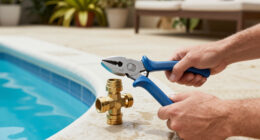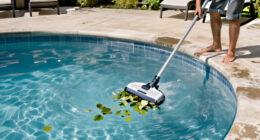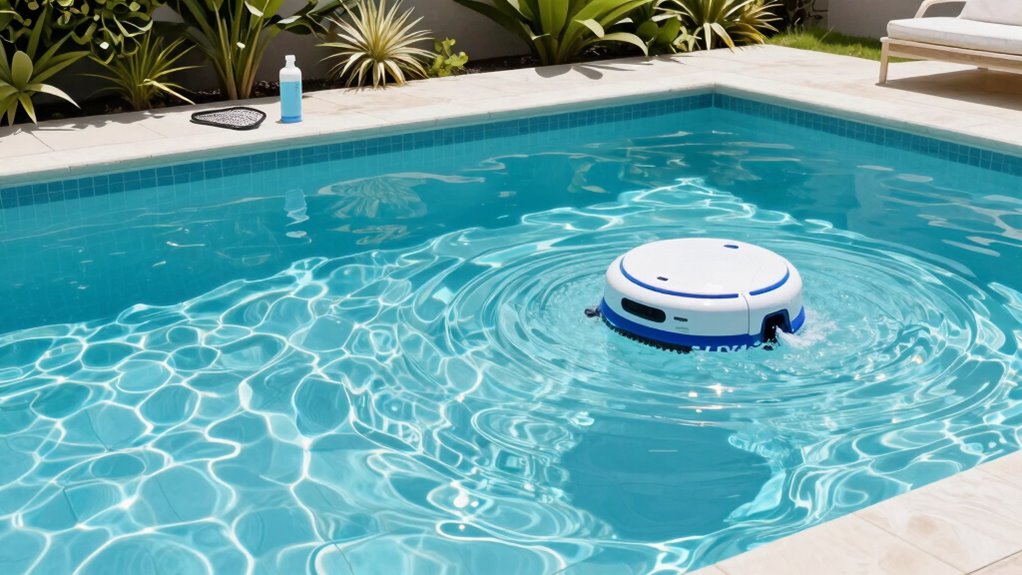

To keep your pool cleaner between deep cleans, regularly remove surface debris with a skimmer and clear out filters or baskets to prevent blockages. Monitor your water chemistry weekly and adjust pH and sanitizer levels to control algae and bacteria. Inspect your equipment for leaks or clogs and keep everything functioning smoothly. Be mindful of local environmental factors that may bring in more debris or pests. For more helpful tips, you’ll find useful strategies to maintain a pristine pool.

Get pool and patio gear delivered free with Prime
- Fast, free delivery on millions of items
- Prime Video, Amazon Music and more included
- Member-only deals all year
Key Takeaways
- Regularly remove surface debris with a skimmer net to prevent sinking and buildup.
- Maintain proper water circulation by ensuring the pump and filters are functioning well.
- Monitor and adjust water chemistry weekly to inhibit algae and bacteria growth.
- Inspect and troubleshoot equipment like hoses, brushes, and pumps to prevent clogs and malfunctions.
- Clear the pool of environmental debris daily, especially during seasons with high pollen, leaves, or pests.
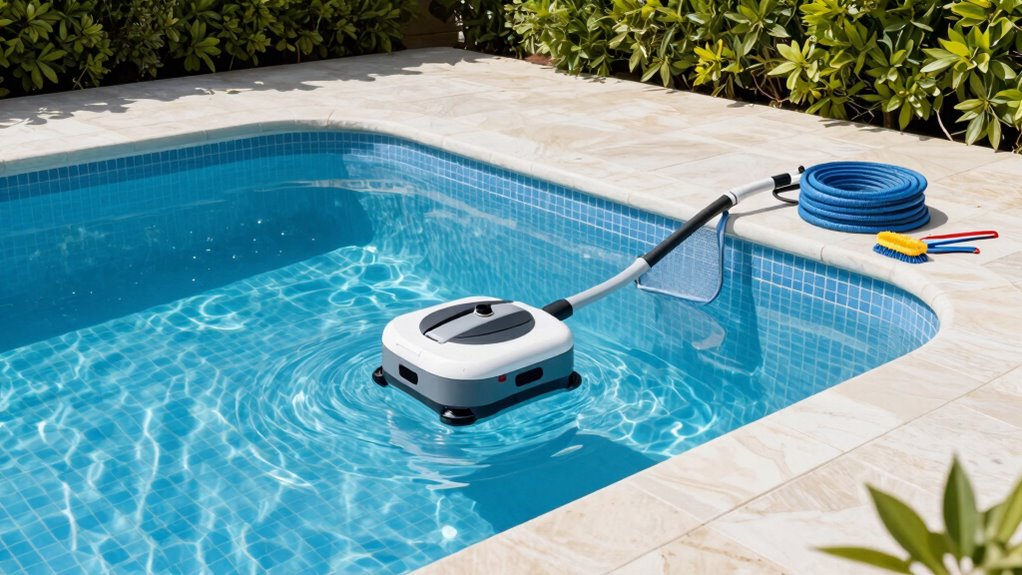
Keeping your pool clean doesn’t have to be a hassle if you know the right tips. Regular pool maintenance is vital to preventing the buildup of dirt, debris, and algae that can turn a crystal-clear pool into a breeding ground for bacteria. When you stay on top of routine cleaning, you’ll find that your pool stays inviting longer and requires less intensive deep cleans. One of the most effective ways to do this is by keeping your pool’s filtration system in tip-top shape. Clean or replace the filter regularly, and make sure your pump is functioning properly. This keeps the water circulating, which prevents stagnation and reduces the chance of debris settling on the bottom or walls.
Maintain your pool effortlessly by keeping filters clean and ensuring your pump runs smoothly for clear, healthy water.
To keep your pool cleaner between deep cleans, it’s essential to remove debris daily. Use a skimmer net to clear leaves, insects, and other floating debris from the surface. This simple step prevents debris from sinking and accumulating on the bottom, making your weekly or bi-weekly deep clean much easier. Also, check the water chemistry weekly—balance pH, alkalinity, and sanitizer levels. Proper chemical balance discourages algae growth and keeps the water sparkling. When the water chemistry is off, algae can quickly take hold, making your pool look dull and requiring more aggressive cleaning. Monitoring water chemistry regularly can help you catch imbalances early and avoid larger issues. Additionally, understanding pool chemistry helps you better interpret test results and adjust treatments accurately.
Equipment troubleshooting is an important part of maintaining a clean pool. If your pool cleaner isn’t functioning properly, you might notice missed spots or uneven cleaning. Check the vacuum hose for leaks or blockages, and ensure the brushes or cleaning heads are attached securely. Sometimes, a clogged or malfunctioning pump can reduce suction, so inspecting the pump’s strainer basket and impeller can save you from bigger issues later. If your automatic cleaner isn’t moving as it should, verify that the wheels or tracks are free of debris and that the cleaner’s tracks aren’t worn out. Troubleshooting these small issues quickly can prevent larger problems that result in dirty, neglected pools. Additionally, understanding local environmental factors can help you anticipate and mitigate debris accumulation caused by seasonal changes or pests. Being aware of biodiversity in your local environment can help you identify the types of debris or pests that might frequently enter the pool area, allowing you to take targeted preventative measures. Regularly inspecting and maintaining your pool equipment, including filters and pumps, ensures everything runs smoothly and keeps your pool cleaner longer.
As an affiliate, we earn on qualifying purchases.
Frequently Asked Questions
How Often Should I Skim the Surface of My Pool?
You should skim the surface of your pool daily or at least every other day, especially if there’s a lot of debris like leaves or bugs. Regular skimming promotes good water circulation and helps with debris removal, preventing buildup that can affect water quality. By staying consistent, you keep your pool cleaner between deep cleans, reduce chemical use, and maintain a sparkling, inviting pool environment.
Can Adding Chemicals Reduce the Need for Cleaning?
Did you know maintaining proper chemical balance can reduce pool cleaning by 30%? Adding the right chemicals keeps your water clear and prevents algae buildup, cutting down on cleaning time. Proper chemical balance also helps with stain prevention, keeping your pool looking new longer. Regularly testing and adjusting chemicals guarantees your pool stays cleaner between deep cleans, making maintenance easier and more effective.
What’s the Best Way to Prevent Algae Buildup?
To prevent algae buildup, you should focus on algae prevention and maintaining proper chemical balance. Regularly test and adjust your pool’s pH and chlorine levels to keep the water sanitized and inhospitable for algae. Consider using algaecides as a preventative measure, especially during warm weather. Consistent skimming, brushing, and filtration also help remove nutrients that algae need to thrive, ensuring your pool stays clear and algae-free between deep cleans.
How Do I Maintain the Pool Filter Between Cleans?
Think of your pool filter as the heart of your swimming oasis. To keep it beating smoothly, you should regularly check and clean the filter during pool circulation. Remove debris, rinse with a hose, and replace any worn parts. Perform filter maintenance every few weeks, depending on usage, to prevent clogging. This keeps your pool water crystal clear and guarantees your filter works efficiently, just like a well-tuned engine.
Are Certain Pool Covers Better for Keeping It Clean?
Yes, certain pool cover types are better for keeping your pool clean. Solid covers, like safety covers, prevent debris from entering the water, reducing cleaning needs. Mesh covers allow water to drain but still block larger debris. To keep your cover effective, perform regular cover maintenance by removing debris, cleaning the cover surface, and inspecting for tears. Proper cover selection and upkeep help maintain a cleaner pool between deep cleans.
Conclusion
Keeping your pool clean between deep cleans might seem like a challenge, but with regular skimming, proper chemical balance, and a good pool cover, you can make maintenance easier. Think about it—why wait for a full clean when a little daily effort can keep your pool sparkling? Staying on top of routine tasks not only saves you time and money but also guarantees you enjoy crystal-clear waters whenever you want. Ready to make pool maintenance a breeze?
Fall Picks
fall essentials
As an affiliate, we earn on qualifying purchases.