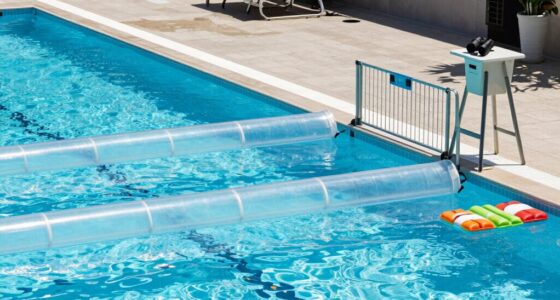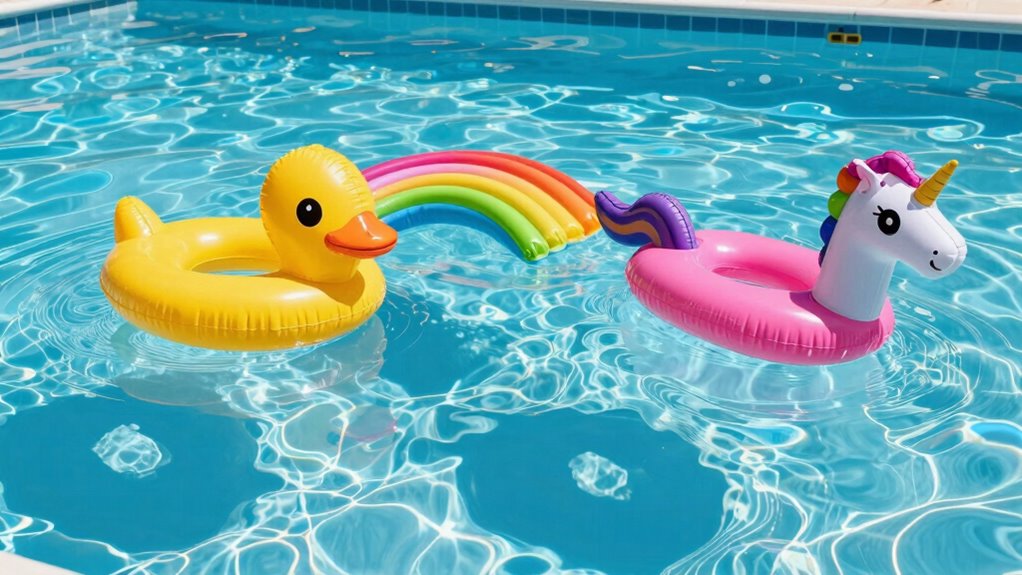

Unsecured pool toys and floats can secretly become safety hazards if left unattended or improperly stored. They may drift into the pool, creating trip or slip risks for everyone, especially children and pets. Damaged or deflated toys can cause injuries or choking hazards if used without inspection. Overinflated or worn floats also increase rupture chances. By keeping toys secure, maintained, and supervised, you reduce hidden dangers. Keep going to uncover essential safety tips that can help protect your loved ones around the pool.

Get pool and patio gear delivered free with Prime
- Fast, free delivery on millions of items
- Prime Video, Amazon Music and more included
- Member-only deals all year
Key Takeaways
- Unsecured pool toys can drift into the pool, creating tripping hazards or obstructing swimmers.
- Loose floats may block pool exits or steps, increasing drowning or injury risks.
- Floating toys can be pulled underwater unexpectedly, posing drowning hazards for children and pets.
- Displaced toys can cause slips or falls when they drift into walkways or poolside areas.
- Unsecured toys are more likely to deflate or break, leading to potential injuries or choking hazards.
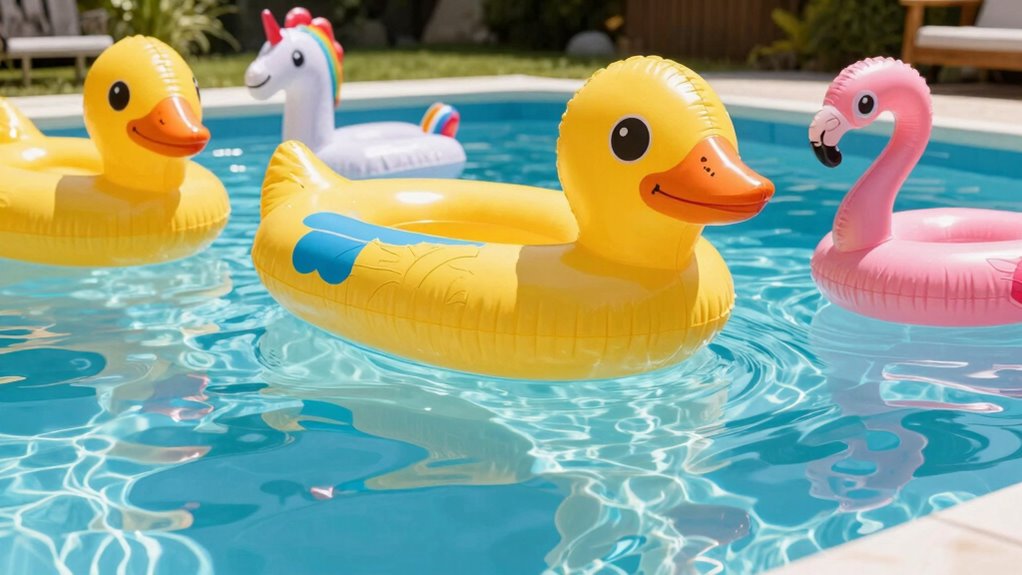
Pool toys and floats often seem harmless, but they can hide serious risks that many parents overlook. While they add fun and excitement to swimming, they can also become safety hazards if not managed properly. One common oversight is ignoring pool toy safety, which involves understanding how these items are used, stored, and maintained. Without proper attention, a seemingly innocent float or toy can turn into a danger for children and even pets. For example, inflatable floats can deflate unexpectedly if they’re not checked regularly or if the valves aren’t sealed tightly. If a float deflates while a child is playing on it, it could cause them to fall or become submerged unexpectedly.
Float maintenance is crucial to prevent accidents. Ensuring that all inflatables are in good condition before use is a simple but vital step. You should regularly inspect for tears, punctures, or leaks, and repair them promptly with appropriate patch kits. Keep in mind that aging or overused floats are more likely to fail, so replacing old or heavily worn ones is a safer choice. When inflating floats, don’t overinflate, as this puts unnecessary stress on the seams and valves, increasing the risk of rupture. Proper float maintenance doesn’t just extend their lifespan; it also keeps your loved ones safer. Additionally, understanding pool equipment advice can help you better manage safety measures around pool toys. Regular safety checks can help identify potential hazards before they cause problems. Incorporating preventive maintenance routines into your pool safety plan can further reduce the risk of accidents. Being aware of pool safety regulations can also guide you in implementing appropriate safety measures.
Another aspect of pool toy safety involves securing or removing toys when they’re not in use. Leaving floats or toys floating unattended can lead to unexpected incidents, especially if children or pets try to grab or climb on them. Small toys, in particular, pose a choking hazard if they come loose and are ingested. Always supervise children around pool toys, and make sure to store or secure them after swimming sessions. This reduces the chance of accidents caused by misplaced or unsecured toys that could drift into the middle of the pool or become a tripping hazard on the deck. Furthermore, proper storage practices can significantly reduce the likelihood of toys becoming hazards. Ensuring toys are stored in designated areas also helps maintain a tidy and safe pool environment.
Ultimately, the key to preventing hidden risks is proactive maintenance and vigilant supervision. Regularly check your pool toys and floats for damage, leaks, and signs of wear. Follow manufacturer instructions for proper inflation and storage. Never underestimate the importance of pool toy safety; it’s about more than just fun — it’s about keeping everyone safe. By taking these simple steps, you can enjoy your pool time without worry, knowing that the floats and toys you trust are secure and in good condition.
inflatable pool float repair kit
As an affiliate, we earn on qualifying purchases.
As an affiliate, we earn on qualifying purchases.
Frequently Asked Questions
Can Unsecured Pool Toys Cause Injuries Outside the Pool Area?
Unsecured pool toys can definitely cause injuries outside the pool area. If you don’t practice proper pool toy storage or float tethering, toys can become projectiles, hitting someone or causing trips and falls. Always secure floats with tethering and store toys safely when not in use. Doing so minimizes the risk of accidents, ensuring your yard stays safe and injury-free for everyone around the pool.
Are There Specific Materials That Increase the Risk of Accidents?
Certain materials, like thin vinyl or cheap foam, can increase your risk of accidents because they lack durability and may tear easily. When pool toys don’t meet manufacturing standards, they’re more likely to break or deflate unexpectedly, causing falls or injuries. To minimize these dangers, choose toys made from high-quality, durable materials that adhere to safety standards. Always inspect toys regularly for signs of wear before use.
How Do Weather Conditions Affect the Safety of Pool Floats?
Weather hazards can surprisingly threaten your pool float’s durability and your safety. Strong winds might turn your float into a rogue projectile, while heat weakens its material, making it more prone to popping. Rain can cause slips and destabilize your balance. So, instead of trusting your float to brave the weather, it’s smarter to store it properly and avoid enjoying it during storms or extreme conditions—ironic, right?
What Age Groups Are Most Vulnerable to Pool Toy-Related Accidents?
Children under five are most vulnerable to pool toy-related accidents because of their limited swimming skills and smaller size, making supervision essential. You should choose pool toys with safe, stable design and always supervise children closely. Implement supervision strategies like constant eye contact and staying within arm’s reach. Proper pool toy design and vigilant supervision help prevent accidents, ensuring a safe and enjoyable experience for everyone around the pool.
Are There Legal Regulations Regarding Pool Toy Safety Standards?
Yes, there are pool toy regulations and safety standards you should follow. These regulations often specify the materials, size, and buoyancy requirements to guarantee safety. Manufacturers are typically required to meet safety standards set by organizations like ASTM International or the Consumer Product Safety Commission. By adhering to these pool toy regulations, you help reduce risks and protect children and others from potential accidents, making your pool a safer environment.
Conclusion
So, next time you grab a pool toy or float, remember that even a quick splash can hide unexpected dangers. It’s funny how we often trust these colorful gadgets without a second thought—until an accident reminds us of the risks. By staying vigilant and checking for safety, you might avoid a costly mistake. Sometimes, it’s the smallest oversight that turns a fun day into a serious problem. Stay safe and enjoy your pool time responsibly.
Halloween Picks
halloween
As an affiliate, we earn on qualifying purchases.