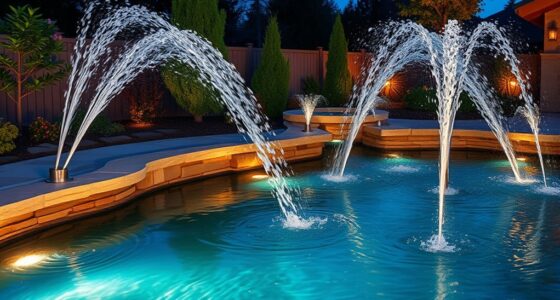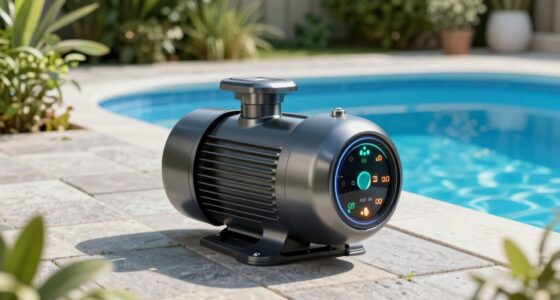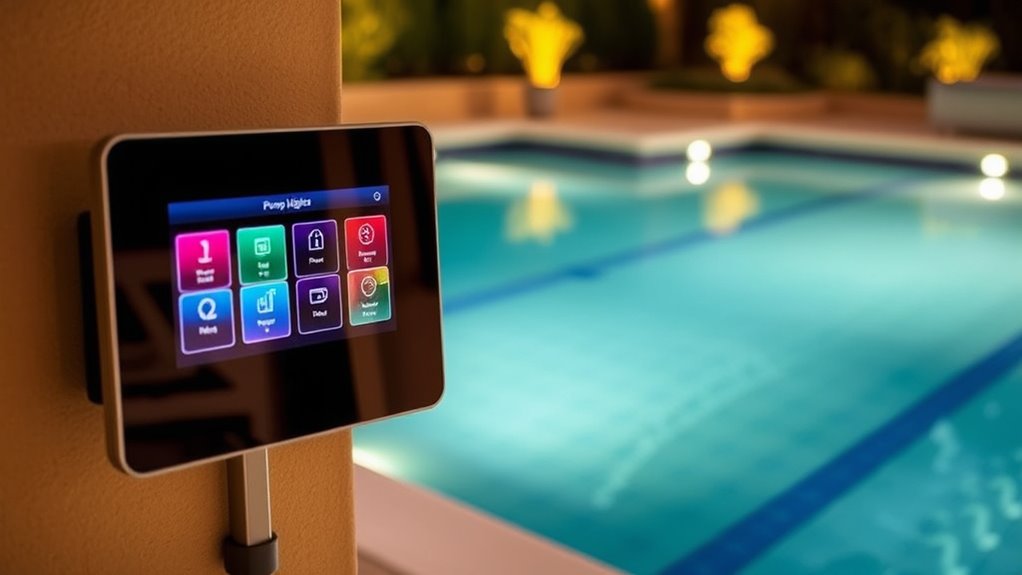

Smart pool controllers let you automate your pump and lighting to keep your pool safe, clean, and energy-efficient. They use sensors and intelligent algorithms to monitor water quality, adjust chemical levels, and control lights automatically. This means you can reduce manual maintenance, save on energy costs, and enjoy a safer swimming environment. If you’re curious about how these systems work to simplify pool management, there’s more to discover below.
Key Takeaways
- Automated systems monitor and adjust pump and lighting settings for optimal performance and energy efficiency.
- Real-time alerts notify homeowners of issues like water imbalance or equipment malfunction.
- Remote control via smartphones or tablets enables convenient management from anywhere.
- Integration with sensors ensures safe water chemistry levels and proper lighting schedules.
- Continuous automation reduces manual oversight, enhances safety, and lowers energy costs.

Smart pool controllers are revolutionizing how homeowners manage their pools by offering automated, real-time control over water quality and equipment. No longer do you need to manually monitor chemical levels or constantly adjust pump settings. Instead, these systems use sensors and intelligent algorithms to keep your pool water pristine and safe, improving overall pool safety. You’ll appreciate how they alert you to potential issues before they become serious, such as detecting pH imbalances or chemical levels that are outside safe ranges. This proactive approach minimizes risks associated with unsafe water, making your pool a safer environment for everyone. With smart controllers, you can set safety parameters and trust the system to maintain them, reducing the chance of accidents caused by neglected maintenance or chemical mishaps. Additionally, these systems often incorporate water chemistry monitoring to ensure precise chemical balance, further enhancing safety and water quality.
Beyond safety, smart pool controllers considerably boost energy efficiency. Traditional pools often waste energy by running pumps longer than necessary or operating lighting at full power even when not needed. These advanced systems analyze usage patterns and adjust equipment operation accordingly. For example, they can reduce pump run times during off-peak hours or dim pool lighting when you’re not swimming, saving you money on energy bills. You’ll find that the system optimizes energy consumption without sacrificing performance or water quality. This not only benefits your wallet but also reduces your environmental impact, aligning with sustainable living goals. By intelligently managing your pool’s equipment, you get the convenience of automated control combined with the advantage of lower energy costs.
Installing a smart pool controller is straightforward, and many models integrate seamlessly with existing equipment. You can control everything from your smartphone or tablet, whether you’re at home or away. This means you have constant visibility into your pool’s status and can make adjustments instantly, ensuring your pool stays safe, clean, and energy-efficient. Plus, the automation features help eliminate guesswork, so you don’t have to worry about over- or under-using your equipment. Over time, the system learns your preferences and adapts to your usage patterns, further enhancing efficiency and safety. With smart controllers, you gain peace of mind, knowing your pool is maintained ideally around the clock, reducing manual oversight and the potential for human error.
Frequently Asked Questions
How Do Smart Pool Controllers Integrate With Existing Home Automation Systems?
You can easily integrate a smart pool controller with your existing home automation system, thanks to its compatibility features. Most controllers support popular platforms like Alexa, Google Home, or Apple HomeKit, simplifying system integration challenges. You just need to connect the controller via Wi-Fi or Z-Wave, then sync it with your home automation setup. This seamless integration lets you control pool functions alongside your other smart devices effortlessly.
What Are the Initial Setup Requirements for a Smart Pool Controller?
To set up a smart pool controller, first confirm your pool wiring is compatible with the device, checking for properly rated circuits and secure connections. You’ll need to verify device compatibility with your existing pump and lighting systems. Then, connect the controller to your network, configure settings via the app or interface, and test each function. Proper wiring and compatible devices make setup smoother and ensure reliable automation.
Can Smart Controllers Be Remotely Accessed via Smartphones or Tablets?
Think of your smart pool controller as a magic wand, giving you remote access and mobile control over your pool. Yes, you can easily connect via smartphones or tablets, allowing you to adjust pumps, lighting, and settings from anywhere. This seamless control means you’re always in charge, whether you’re lounging at home or away. With just a few taps, you bring your pool’s rhythm into your hands, anytime, anywhere.
What Maintenance Is Needed for Long-Term Operation of Smart Pool Systems?
To guarantee long-term operation of your smart pool system, you need to regularly check the chemical balance to prevent issues like algae growth or corrosion. Additionally, perform routine equipment inspections, including pumps, filters, and lighting components, to catch any wear or malfunctions early. Keeping everything clean and maintaining proper chemical levels helps your smart system run smoothly, saving you time and preventing costly repairs over time.
How Do Smart Controllers Detect and Troubleshoot System Malfunctions?
Smart controllers detect malfunctions through sensor diagnostics and fault detection features. They continuously monitor system performance, identifying issues like pump failures or lighting problems. When a fault occurs, the system triggers alerts or shuts down affected components to prevent damage. You can troubleshoot by checking diagnostic messages, resetting the controller, or inspecting sensors and connections. Regular updates and maintenance guarantee the system remains responsive and accurately detects potential malfunctions.
Conclusion
With smart pool controllers, you simplify swimming, saving time, energy, and effort. Seamlessly synchronize pumps and lighting, creating a stunning, spot-on pool experience. Say goodbye to stress and sky-high bills—step into smarter, smoother swimming with state-of-the-art systems. Embrace ease, efficiency, and excellence in your aquatic oasis. Make your pool perfect with the power of intelligent control—because your pool deserves precision, performance, and pure pleasure.