
To keep your spa water balanced during heavy use, test the water daily and adjust your chemicals accordingly. Increase sanitizer levels to combat contaminants and maintain proper pH (7.2-7.8) and alkalinity (80-120 ppm) to prevent issues. Regularly clean filters and monitor water chemistry to stay ahead of problems. Consistent maintenance guarantees safe, clear water. For more tips on managing spa water during busy times, keep exploring effective strategies.

Get pool and patio gear delivered free with Prime
- Fast, free delivery on millions of items
- Prime Video, Amazon Music and more included
- Member-only deals all year
Key Takeaways
- Test water daily and monitor pH, alkalinity, and sanitizer levels during heavy use.
- Adjust pH to stay between 7.2 and 7.8 for optimal sanitizer effectiveness.
- Increase sanitizer levels (chlorine or bromine) to combat contaminants from heavy use.
- Regularly inspect and clean filters to maintain water clarity and remove debris.
- Consider partial water replacement if chemical levels are difficult to stabilize during busy periods.
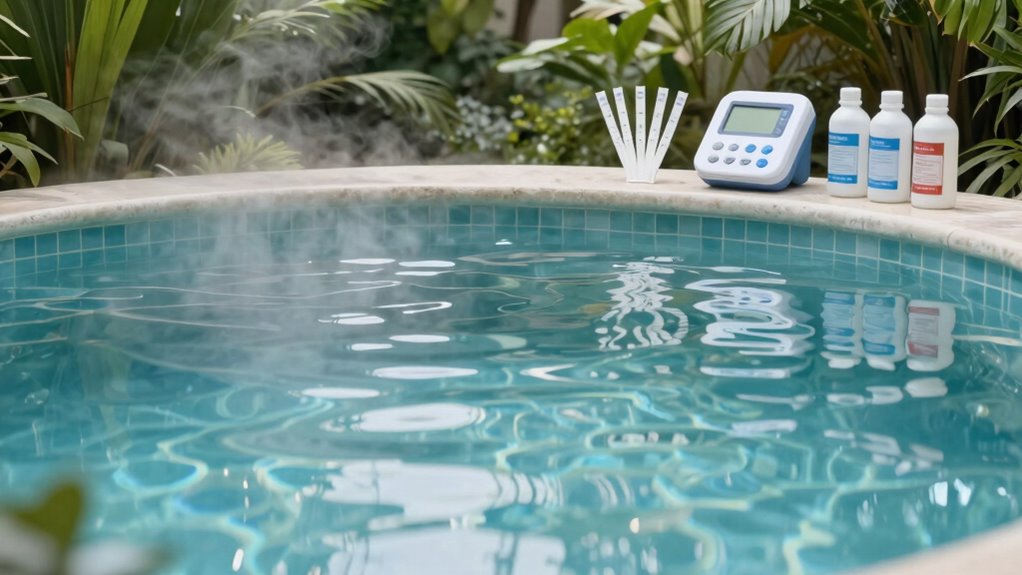
Have you ever wondered why maintaining proper water balance is vital for your spa? When your spa experiences heavy use, the water can quickly become unbalanced, leading to issues like cloudy water, unpleasant odors, and even damage to the equipment. To keep your spa water inviting and safe, you need to stay on top of chemical adjustments and follow a consistent maintenance schedule. Heavy use introduces more contaminants like oils, lotions, sweat, and dirt, which can throw off the delicate balance of your water chemistry if not managed properly. Regular testing helps detect imbalances early, preventing costly repairs and ensuring a safe bathing environment.
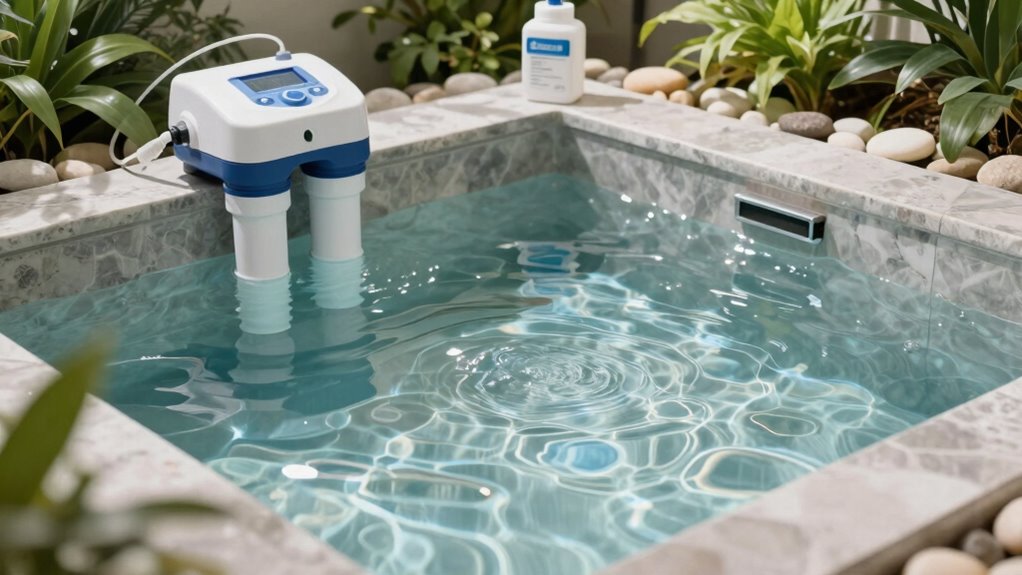
First, it’s essential to test your water frequently—ideally daily when your spa is in heavy use. Use test strips or a liquid test kit to check pH, alkalinity, and sanitizer levels. During busy periods, you’ll likely need to make regular chemical adjustments to keep these parameters within the recommended range. For example, if your pH drops below 7.2, you’ll want to add pH increaser; if it rises above 7.8, use a pH reducer. Maintaining proper pH ensures sanitizer effectiveness and prevents scale buildup or corrosion. Similarly, alkalinity acts as a buffer, stabilizing pH. If alkalinity dips below 80 ppm, add alkalinity increaser; if it’s too high, consider partial water replacement or specific chemicals to lower it. Keeping an eye on water chemistry helps prevent imbalances from escalating. Consistently monitoring water chemistry also helps identify trends and make proactive adjustments.
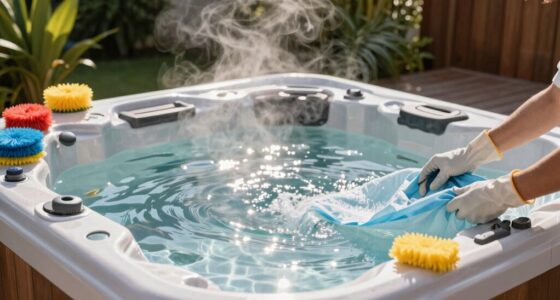
Sanitizer levels are equally vital, especially with increased use. Test chlorine or bromine levels regularly, aiming for the recommended range (around 3-5 ppm for chlorine). During periods of heavy use, you might need to increase sanitizer doses to combat the higher load of contaminants. Remember, consistent dosing and proper chemical adjustments keep the water safe and clear. Additionally, maintaining proper water biodiversity can help naturally support water quality by reducing the need for excessive chemical use. Monitoring and adjusting water chemistry regularly is crucial for preventing problems and maintaining a safe environment. Regularly inspecting and cleaning your filter also supports water quality by ensuring efficient filtration and debris removal, which is especially important during heavy use periods.
As an affiliate, we earn on qualifying purchases.
Frequently Asked Questions
How Often Should I Test Spa Water During Heavy Use?
During heavy use, you should test your spa water at least 2-3 times daily to guarantee proper balance. Regularly check pH, alkalinity, and sanitizer levels, and adjust as needed. Keep your spa cover maintained and clean to prevent debris from affecting water chemistry. Additionally, clean your filter weekly to maintain water clarity and optimize chemical effectiveness, helping you enjoy a safe, balanced spa experience during busy times.
What Additional Chemicals Are Needed for High Usage Periods?
During high usage, you need to make chemical adjustments to maintain water balance. Add a pH stabilizer to prevent pH swings and guarantee comfort. You might also need to boost sanitizer levels, like chlorine or bromine, to keep the water hygienic. Regularly test the water, and adjust chemicals as needed. This helps prevent cloudiness, algae growth, and skin irritation, keeping your spa clean and inviting during heavy use.
How Can I Prevent Algae Growth With Frequent Use?
You might think frequent use makes algae inevitable, but proper algae prevention and chemical stabilization can keep your spa clear. Regularly shock the water with a sanitizer like chlorine or bromine, especially after heavy use, to prevent algae growth. Additionally, maintain correct pH and sanitizer levels consistently. Using algaecide as a preventive measure also helps, ensuring your spa stays clean and algae-free, even with frequent use.
What Signs Indicate Water Imbalance During Heavy Use?
You’ll notice water imbalance through signs like pH fluctuation, where the water becomes cloudy or foamy, and increased sanitizer consumption, which suggests it’s working harder to keep bacteria at bay. You might also feel skin irritation or see algae growth. During heavy use, these signs mean you should test your water regularly, adjust chemical levels promptly, and keep an eye on your sanitizer levels to maintain a safe, balanced spa experience.
How Do Temperature Changes Affect Water Chemistry Balance?
Temperature fluctuations can turn your spa water into a chaotic, bubbling mess, disrupting chemical stability and making balancing a nightmare. When temperatures swing wildly, your water’s chemistry gets thrown off, causing pH and sanitizer levels to become unpredictable. These changes force you to constantly adjust chemicals, preventing stability. To keep your spa’s water balanced, maintain a consistent temperature, and regularly test and adjust chemicals to combat the chaos caused by temperature swings.
Conclusion
So, next time your spa turns into a bubbling science experiment, remember: balancing the water isn’t just about avoiding crystal-clear chaos. It’s about saving your skin, your sanity, and maybe even your reputation as the ultimate relaxation guru. Keep those chemicals in check, test frequently, and don’t let heavy use turn your oasis into a swamp. Because, let’s face it, nobody wants their spa to become the hottest new swamp tour destination. Happy relaxing!
Halloween Picks
halloween
As an affiliate, we earn on qualifying purchases.