
To maintain clear, foamy water in your hot tub, regularly balance your water chemistry by testing pH, alkalinity, and sanitizer levels, and add chemicals as needed. Clean and replace filters frequently to trap debris and oils that cause cloudiness and foam. Use clarifiers to help clear cloudy water and shock your tub regularly to break down organic materials. If you keep up with these steps, you’ll keep your hot tub inviting and healthy—more tips await if you continue.
Key Takeaways
- Regularly test and balance pH, alkalinity, and sanitizer levels to prevent cloudiness and foam.
- Clean or replace filters frequently to ensure effective removal of debris and organic matter.
- Use clarifiers and shock treatments to bind particles and eliminate organic contaminants that cause cloudiness and foam.
- Rinse users beforehand and minimize oils or lotions to reduce foam formation.
- Maintain a consistent maintenance schedule, including water testing, filter care, and chemical adjustments, for optimal clarity.
Keeping your hot tub water clear is vital for both your comfort and health. When your water looks cloudy or foamy, it’s a sign that something’s off with your water chemistry or filtration system. Addressing these issues quickly can prevent bacteria buildup and ensure your soaking experience remains relaxing and safe. The first step is understanding how water chemistry plays a key role; balancing pH, alkalinity, and sanitizer levels keeps your water healthy and prevents cloudiness. If your pH is too high or too low, it can cause mineral deposits or cloudy water, making it harder for your filtration system to do its job effectively. Regularly testing your water with a reliable test kit can help you catch these imbalances early, so you can add the appropriate chemicals to restore proper balance.
Your filtration system is your primary defense against debris, oils, and organic matter that can cloud your water. Make sure your filter is clean and functioning correctly—clogged or dirty filters reduce circulation, resulting in poor water clarity. Most filters need to be rinsed at least once a week and replaced every few months, depending on usage. When your filtration system isn’t working efficiently, contaminants can accumulate, leading to cloudy or foamy water. In some cases, you might need to upgrade to a higher-quality filter or add a supplemental filter cartridge to enhance performance. Keep a routine maintenance schedule so your filtration system can continuously trap dirt and particles before they cause issues. Additionally, choosing the right filter type can significantly improve water clarity and filtration efficiency.
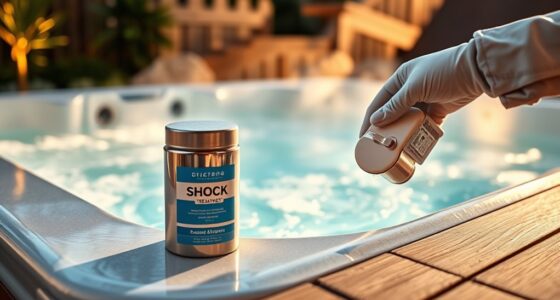
If you notice foam forming on your water surface, it’s often a sign of excess oils, lotions, or organic materials being introduced into the hot tub. Using a clarifier can help bind small particles together, making it easier for your filter to remove them from the water. Additionally, reducing the use of oils, body lotions, or soaps before entering the hot tub can greatly decrease foam formation. Make sure all users rinse off beforehand and avoid bringing in any foreign substances. Regular shocking with a sanitizer can also break down organic contaminants, preventing build-up that causes cloudiness and foam.
Frequently Asked Questions
Can Certain Bath Products Cause Cloudiness or Foam?
Yes, certain bath products can cause cloudiness or foam in your hot tub. Bath product interactions, especially with oils, lotions, or soaps, often lead to foam formation causes. These products introduce residues and detergents that disrupt water clarity and create excess foam. To prevent this, avoid using heavy or oily bath products before soaking, and rinse your body thoroughly to minimize the impact on your hot tub’s water quality.
How Often Should I Replace Hot Tub Water?
Think of your hot tub like a vintage typewriter—over time, parts need replacing. You should replace the water every 3 to 4 months, or sooner if you notice cloudiness or foam. Regular water testing helps keep chemicals balanced, while filter maintenance ensures clear water. By staying on top of these tasks, you’ll enjoy crisp, clean water and a relaxing soak every time, just like a perfect vintage read.
Does Hard Water Contribute to Cloudiness?
Yes, hard water can contribute to cloudiness in your hot tub. Water hardness, caused by mineral buildup like calcium and magnesium, leads to cloudy water and foamy bubbles. To prevent this, test your water regularly and use a water softener or condition your water with products designed for hot tubs. Proper maintenance helps reduce mineral buildup, keeping your hot tub clear and inviting.
Are Natural Remedies Effective for Clearing Foam?
Natural remedies like herbal remedies and essential oils can help clear foam in your hot tub, but their effectiveness varies. Herbal remedies such as chamomile or aloe may soothe the water, while essential oils like tea tree or eucalyptus can reduce foam and bacteria. Use them sparingly, and always dilute properly. Keep in mind, these remedies work best with good water maintenance and regular cleaning to prevent foam buildup.
What Role Do Ph Levels Play in Water Clarity?
Your pH levels play a vital role in water clarity because proper pH balance prevents water acidity from becoming too high or too low. When pH is maintained between 7.2 and 7.8, it keeps the water clear by reducing foam and cloudiness caused by imbalanced chemicals. Regularly testing and adjusting your hot tub’s pH helps guarantee the water remains clean, clear, and comfortable for soaking.
Conclusion
Keeping your hot tub clear isn’t just about maintenance—it’s about creating a relaxing oasis that beckons you in. Think of your hot tub as a mirror to your care; when you tend to it, its sparkling clarity reflects your attention and love. So, stay vigilant with your water balance and filtration. With each step, you’re not just maintaining water; you’re crafting a sanctuary where clarity and tranquility dance together, inviting you to unwind in pristine serenity.