
TL;DR

Get pool and patio gear delivered free with Prime
- Fast, free delivery on millions of items
- Prime Video, Amazon Music and more included
- Member-only deals all year
The best smart outdoor WiFi extender balances weather resistance, reliable backhaul, and WiFi standards like WiFi 6. For large or obstructed areas, wired PoE access points outperform simple repeaters. Know your environment and needs before buying.
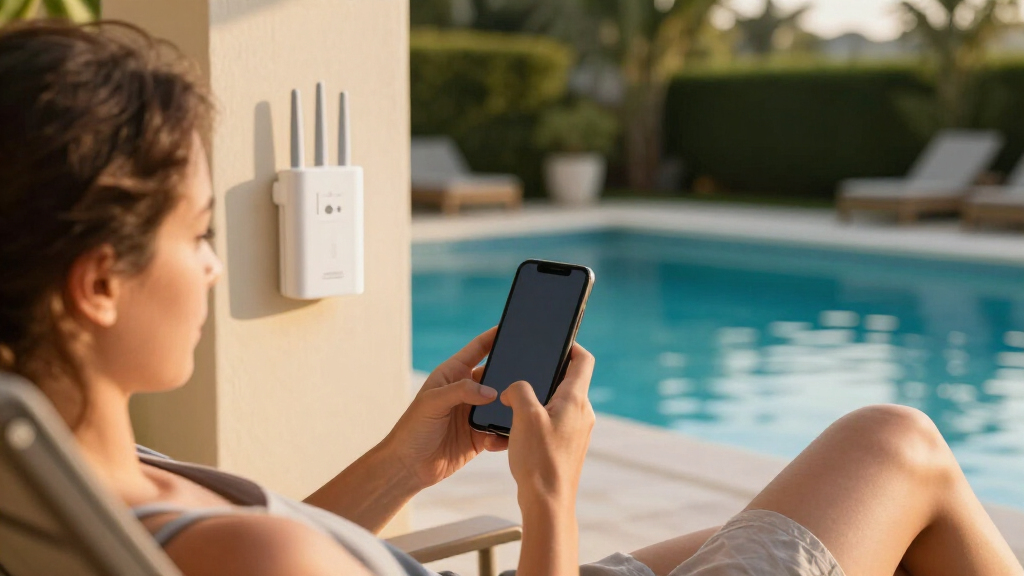
Imagine sitting in your backyard, streaming a movie or monitoring your security cameras, all without a hiccup. That’s the promise of a good outdoor WiFi extender — reliable, steady internet beyond your walls. But not all extenders are created equal. Some fade away in rain, others slow down with multiple devices, and a few just don’t cover as much ground as you’d hope.
Today, you’ll learn how to pick the best smart outdoor WiFi extender for your yard, farm, or RV. We’ll cover what features matter most, common pitfalls, and real-world tips. Whether you want to boost signal for smart cameras or just keep your streaming going outside, this guide will help you make the right choice.
Prioritize weather-rated, IP65+ outdoor devices with smart management features for durability and control.
Wired Ethernet or PoE backhaul delivers the most stable, high-speed outdoor WiFi, especially for security cameras or remote access points.
WiFi 6 support provides better device handling and future-proofing, but dual-band support is essential for real-world coverage.
Placement is more important than maximum specs; mount high, clear of obstructions, and test signals before permanent installation.
Avoid marketing hype: real-world coverage drops significantly with obstacles, and security features like WPA3 are vital for protection.
What Makes a WiFi Extender ‘Smart’ and Outdoors Ready?
When shopping for a smart outdoor WiFi extender, durability is king. Think IP ratings like IP65 or higher — meaning dustproof and waterproof. It needs to withstand rain, wind, and temperature swings. But why does this matter? Because outdoor environments are unpredictable; a device that isn’t weather-resistant can quickly fail, leading to costly replacements or downtime. For example, an IP67-rated device can survive temporary submersion, which is crucial in heavy rain or flooding scenarios, ensuring your network remains operational without interruption.
Beyond weatherproofing, a smart extender offers management via apps, remote monitoring, automatic updates, and security features like WPA3. These smart features enable you to troubleshoot issues remotely, schedule updates during off-peak hours, and maintain security, which is vital when your network is exposed outdoors. For instance, the ability to receive alerts if a device disconnects or detects unusual activity can prevent security breaches or alert you to potential problems before they escalate.
In short? Durability plus smart features = the best outdoor WiFi solution. It’s about building a network that can handle environmental challenges and your digital needs simultaneously, minimizing maintenance and maximizing uptime.
As an affiliate, we earn on qualifying purchases.
How to Pick the Right Coverage for Your Yard or Farm
Coverage isn’t just about maximum range numbers; it’s about understanding how environmental factors influence real-world performance. A device claiming 300 meters under perfect, open conditions often drops significantly in cluttered outdoor spaces. Why? Because obstacles like trees, metal sheds, and walls absorb or reflect WiFi signals, reducing their effective range. Recognizing these factors helps you set realistic expectations and avoid overestimating your network’s capabilities.
For example, in a large farm, multiple access points or a mesh system might be necessary to ensure seamless coverage. Each device’s placement becomes critical: mounting high and away from obstructions minimizes signal loss. Testing with your phone or laptop before final installation helps identify dead zones and optimal locations. Remember, the advertised range is an ideal scenario; in practice, terrain and obstacles can halve or even third that distance. Choosing a device with higher nominal range and adjustable antennas provides flexibility to adapt to your environment, ensuring consistent coverage where you need it most.
Understanding your environment’s specific challenges allows you to select equipment that balances range with performance, avoiding costly trial-and-error and ensuring reliable outdoor connectivity.
Wired vs Wireless: Which Backhaul Boosts Reliability?
The backbone of your outdoor WiFi network determines its stability and speed. Wired Ethernet or Power over Ethernet (PoE) connections provide a dedicated, interference-free channel for data transmission. Why does this matter? Because outdoor environments are prone to interference from foliage, structures, and other wireless signals, which can cause latency and reduce throughput. For example, a PoE-mounted access point connected via outdoor-rated cable offers a consistent, high-speed connection unaffected by environmental factors, ensuring your smart cameras or remote sensors operate without interruptions.
Wireless backhaul, while easier to install, can suffer from interference, obstacles, or distance limitations, leading to inconsistent performance. If your property allows, running an outdoor Ethernet cable to a PoE-enabled access point creates a dedicated link, minimizing latency and maximizing throughput. This setup is especially beneficial for security applications or high-bandwidth streaming, where consistent performance is critical. The tradeoff? It involves initial installation effort and planning, but the long-term gains in reliability and speed are substantial.
In summary, wired backhaul options like Ethernet and PoE are preferable for demanding outdoor setups, providing a stable foundation that supports high data rates and low latency, essential for security, streaming, and smart home integration.
WiFi Generation and Bands: What Matters Outdoors?
WiFi 6 is the latest standard providing significant advantages for outdoor setups, especially in environments with multiple devices. Its ability to handle numerous connections simultaneously reduces lag and improves overall network efficiency. Why is this important outdoors? Because outdoor spaces often host many smart devices—cameras, sensors, smart locks—and a WiFi 6 router ensures they all operate smoothly without bottlenecks. However, newer standards like WiFi 6E and WiFi 7, while offering wider channels and lower latency, have limitations outdoors, such as shorter range at 6 GHz and susceptibility to obstacles. Therefore, their benefits may be less noticeable unless your environment is optimized for these frequencies.
Dual-band support—2.4 GHz and 5 GHz—is essential for outdoor environments. The 2.4 GHz band provides longer range and better obstacle penetration, making it suitable for devices farther from the access point or in areas with dense foliage. Conversely, 5 GHz offers higher speeds but is more sensitive to obstacles, which can hinder coverage. For example, smart cameras placed in the garage or barn benefit from 2.4 GHz’s longer reach, ensuring consistent connectivity despite physical barriers.
Choosing a device that supports both bands allows you to balance coverage and speed, tailoring your setup for optimal outdoor performance. It also future-proofs your network as more outdoor-compatible WiFi 6 devices become available.
Mesh, Repeater, or Access Point? What’s Best for Your Yard?
In outdoor setups, understanding the differences between mesh nodes, repeaters, and dedicated access points is crucial for optimal performance. Mesh systems integrate seamlessly with existing networks, offering unified management and the convenience of seamless roaming. They are ideal if you want a simple, expandable solution that adapts as your needs grow. However, for large or complex outdoor spaces, a wired outdoor access point connected via PoE provides a dedicated, high-capacity WiFi zone, offering superior speed and reliability. Think of it as installing a high-performance WiFi hub in your yard that doesn’t rely on signal boosting or rebroadcasting.
Repeaters, while easy to set up, often introduce latency and reduce throughput because they handle uplink and downlink on the same radio, which can bottleneck your network. They are suitable for quick, casual coverage but not for bandwidth-intensive applications like security feeds or streaming.
Ultimately, the best choice depends on your environment. If you can run Ethernet, a wired access point delivers the best performance. If not, a mesh system provides flexibility and ease of management, though with some performance tradeoffs. Properly planning your network with these considerations in mind ensures reliable outdoor WiFi tailored to your specific needs.
Security and Management: Keep Your Outdoor Network Safe
Security is paramount when deploying outdoor WiFi, as exposed networks are more vulnerable to intrusion. Modern devices supporting WPA3 encryption significantly enhance security by providing stronger password protection and safeguarding against brute-force attacks. Why does this matter? Because outdoor networks often host sensitive smart cameras, locks, or personal data; a breach could compromise your property or privacy. Automatic firmware updates are equally important, as they patch vulnerabilities and improve functionality, ensuring your device remains resilient against evolving threats.
Management features like guest networks, client isolation, and remote monitoring give you control and visibility over your outdoor network. For instance, setting up a guest network prevents visitors from accessing your main devices, while remote diagnostics help troubleshoot issues without physical access. Alerts for unusual activity or device disconnections enable proactive security, preventing potential breaches before they escalate. In essence, comprehensive security and management tools turn a vulnerable outdoor network into a robust, protected environment, reducing risks of hacking, eavesdropping, or device compromise.
Installation Tips: Place Your Outdoor Extender for Best Results
Proper placement is critical for maximizing your outdoor WiFi extender’s performance and longevity. Mount your device high enough to clear obstacles like trees or structures, but accessible enough for maintenance. For example, installing a PoE access point on a pole at the yard’s edge ensures broad coverage. Avoid mounting near metal siding, dense foliage, or thick walls, as these materials significantly attenuate signals. Understanding the environment helps you choose the best location to minimize dead zones and interference.
Use outdoor-rated, UV-resistant Ethernet cables and weatherproof connectors to withstand the elements. Creating a drip loop in your cable runs prevents water from traveling along the cable into the device, which can cause corrosion or short circuits. Proper sealing with weatherproof enclosures and cable glands extends device lifespan by protecting against moisture ingress. Testing your placement with your phone or laptop before final installation allows you to identify weak spots or dead zones, enabling adjustments for optimal coverage. Remember, strategic placement often beats maximum specs: a well-positioned device will outperform a theoretically better device placed poorly.
Frequently Asked Questions
Will an outdoor WiFi extender work with my existing router?
Most outdoor WiFi extenders are compatible with standard routers, but advanced mesh or WiFi 6 devices may require specific ecosystems. Always check the model details to confirm compatibility with your current setup.
How far can outdoor WiFi reach realistically?
Range varies widely depending on terrain and obstacles. Open line-of-sight can push coverage to 300 meters, but walls, trees, and metal structures often reduce this to 50-100 meters. Always test in your environment.
Does an outdoor WiFi extender cut my internet speed in half?
Not necessarily, but single-radio repeaters often halve throughput because they handle uplink and downlink on the same radio. Wired backhaul or dedicated access points maintain higher speeds and lower latency.
Should I choose mesh or a standalone access point?
Mesh systems are easier for roaming and management, ideal for large or irregularly shaped yards. For maximum performance, a wired outdoor access point connected via PoE usually outperforms a mesh extender.
Is WiFi 6 worth it for outdoor use?
Yes. WiFi 6 handles multiple devices efficiently, reducing lag and boosting capacity. Even if your current devices don’t support WiFi 6, future-proofing your network makes sense as more outdoor devices adopt the standard.
Conclusion
For outdoor WiFi, durability and reliable backhaul matter more than sheer speed. A well-placed, weather-rated WiFi 6 mesh node or PoE access point can transform your yard into a seamless online extension. Think of your outdoor network as a garden — it needs careful planting and regular maintenance to flourish.
Choose wisely, install thoughtfully, and your outdoor WiFi will serve you reliably for years to come. After all, in a world full of smart devices, good coverage isn’t a luxury — it’s a necessity.
Halloween Picks
halloween
As an affiliate, we earn on qualifying purchases.