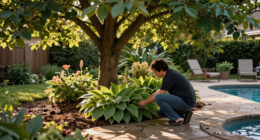
Before adding a spa to your pool plan, you should consider your available space, budget, and maintenance needs. Decide if you want a standalone or built-in spa and think about its placement for peak aesthetics and accessibility. Clarify your main purpose—relaxation, entertaining, or therapy—and choose features accordingly. Also, factor in long-term costs like energy and upkeep. Keep exploring to make the best choices for your outdoor space and enjoy a seamless integration.

Get pool and patio gear delivered free with Prime
- Fast, free delivery on millions of items
- Prime Video, Amazon Music and more included
- Member-only deals all year
Key Takeaways
- Assess available space to ensure proper placement without overcrowding or disrupting landscape features.
- Determine your budget, including installation, maintenance, and energy costs for different spa options.
- Clarify the primary purpose—relaxation, socializing, or therapy—to select suitable size and features.
- Decide whether a built-in or standalone spa fits best with your pool design and backyard aesthetic.
- Consider maintenance requirements and durability to choose a model that meets your upkeep capabilities.

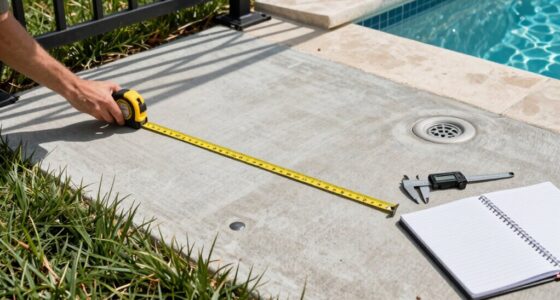
Adding a spa to your pool can enhance your outdoor oasis, but before you make any decisions, it’s vital to evaluate your space, budget, and goals. One of the first things to ponder is how a spa will fit into your landscape. Measure the available area carefully to guarantee there’s enough room for both your pool and the spa without overcrowding your yard. Think about how the spa will complement your existing features—will it be visible from your patio or nestled discreetly in a corner? Planning the layout now saves you headaches later and guarantees your outdoor space remains functional and inviting.
Next, you need to decide on your budget. Spas come in a range of prices, from basic models to high-end designs with advanced features. Remember to include installation costs, which can vary depending on whether you need electrical upgrades or special plumbing. Also, factor in ongoing expenses like energy consumption and maintenance. Energy efficiency is a key point here; choosing a well-insulated, energy-efficient spa can considerably reduce your monthly operating costs. Look for models with good insulation, efficient pumps, and eco-friendly heating options. An energy-efficient spa not only saves money but also minimizes your carbon footprint.
Maintenance requirements are another essential aspect. Spas need regular cleaning, water balancing, and equipment checks. Some models are designed for easier upkeep, with features like self-cleaning systems or minimal filter maintenance. Assess whether you’re willing to commit time and effort or if you prefer a low-maintenance option. Additionally, think about the longevity and durability of the materials used in your chosen spa. Investing in a model with durable components means fewer repairs and replacements over time, which can save you money and hassle.
You should also clarify the primary purpose of your spa. Will it be used mainly for relaxation, social gatherings, or hydrotherapy? This decision influences the size, features, and even the type of spa you select. For example, if relaxation is your main goal, prioritize comfort features like ergonomic seating and soothing jets. If socializing is key, opt for a larger model with ample space and entertaining features.
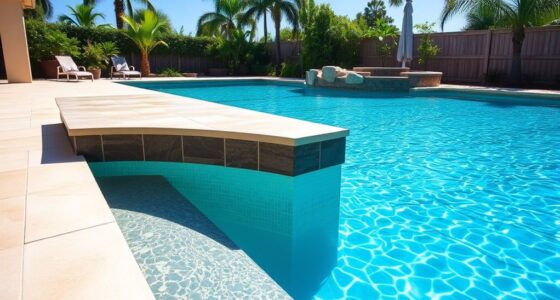
Finally, consider the integration of your spa with your existing pool setup. Decide whether you want a standalone unit or a built-in design. Built-in spas often look seamless and can be more energy-efficient, but they may require more extensive construction. Standalone units are easier to install but might not blend as smoothly with your landscape. Whichever option you choose, planning ahead ensures your investment aligns with your vision and lifestyle, making your backyard retreat truly enjoyable. Additionally, understanding the energy efficiency of different models can help you make informed decisions that benefit both your wallet and the environment.
As an affiliate, we earn on qualifying purchases.
Frequently Asked Questions
How Much Does Installing a Spa Typically Cost?
Installing a spa usually costs between $3,000 and $10,000, depending on the spa features you choose. High-end models with advanced features or custom designs can push costs higher. Keep in mind, energy-efficient spas might have a higher upfront price but save you money long-term through lower energy bills. Consider your budget and desired features carefully to find a spa that fits both your needs and financial plan.
What Are the Best Spa Sizes for Small Yards?
For small yards, the best spa sizes are compact, around 4-6 feet in diameter or similar rectangular dimensions, allowing you to maximize space. Consider landscaping options that include built-in benches or corner designs to save room. Privacy considerations are vital; opt for strategic plantings, fences, or screens to create a secluded ambiance without overwhelming your yard. These choices guarantee comfort and functionality despite limited space.
How Long Does Installation Usually Take?
The installation typically takes about one to two weeks, depending on your yard’s complexity and contractor availability. During this time, you’ll focus on pool lighting setup, ensuring energy efficiency with eco-friendly equipment. You’ll coordinate digging, equipment placement, and finishing touches, while also considering how energy-efficient systems can reduce long-term costs. Planning ahead helps streamline the process, so you can enjoy your new spa sooner and with fewer surprises.
Can a Spa Be Added Later if I Decide Now?
Yes, you can add a spa later, but keep spa safety in mind during installation, and consider how it impacts spa energy efficiency. When planning for future additions, confirm the space and infrastructure can support the spa without compromising safety or increasing energy costs. Consulting with professionals now helps you design your pool area for seamless integration later, making sure safety measures are in place and energy efficiency remains a priority.
What Maintenance Is Required for a Spa?
You need to regularly test and balance your spa chemicals to keep the water clean and safe, adding chlorine or bromine as needed. You also must run the water filtration system daily to remove debris and contaminants. Regularly clean the filters and check the water pH levels to prevent corrosion or scaling. Proper maintenance guarantees your spa stays inviting, safe, and enjoyable for every use.
Conclusion
Thinking about adding a spa to your pool? It’s a great way to enhance your backyard oasis, but don’t rush the decision. Consider your space, budget, and how often you’ll use it. Some worry about maintenance, but with proper planning, a spa can be low-maintenance and truly worth the investment. Take your time, weigh the options, and you’ll create a relaxing retreat that fits your lifestyle perfectly.
Halloween Picks
halloween
As an affiliate, we earn on qualifying purchases.