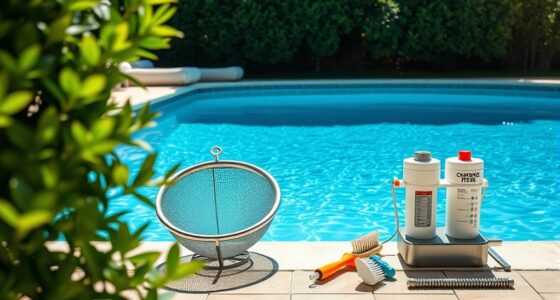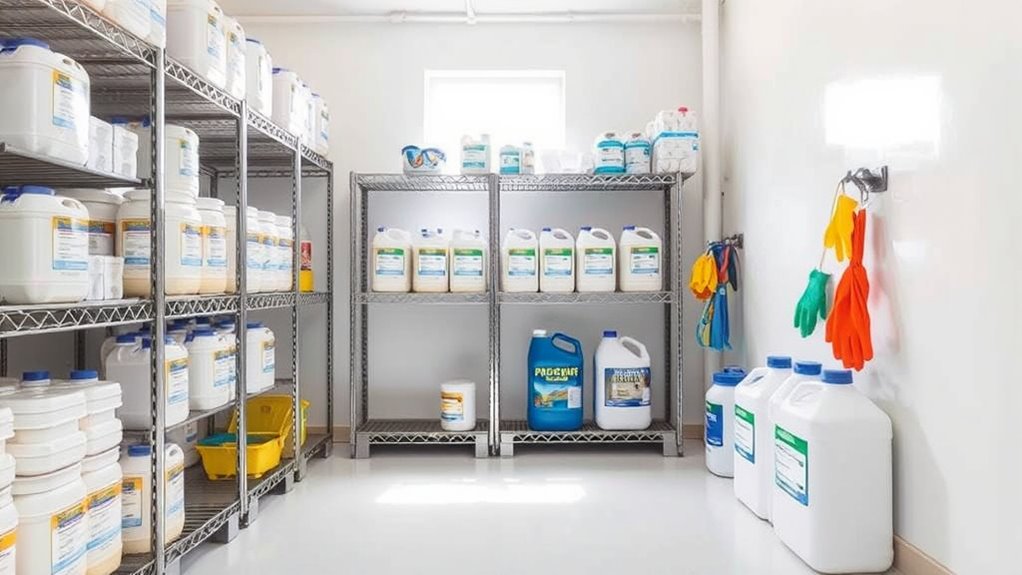

To store and handle pool chemicals safely, keep chemicals in their original, labeled containers and make certain lids are tightly sealed. Store them in a cool, dry, well-ventilated indoor area away from heat, open flames, and children. Use secondary containment to prevent leaks and organize chemicals by type to avoid dangerous reactions. Wear proper PPE during handling and regularly inspect storage areas. You’ll discover more tips for safe pool chemical management as you continue.
Key Takeaways
- Store pool chemicals in their original, labeled containers with tightly sealed lids to prevent leaks and accidental mixing.
- Keep chemicals in a cool, dry, well-ventilated indoor area away from heat sources and direct sunlight.
- Use secondary containment trays and organize chemicals by type to prevent dangerous reactions and spills.
- Always handle pool chemicals with appropriate PPE and follow safety protocols during transfer and application.
- Regularly inspect storage areas for deterioration, leaks, and ensure proper signage and secure access to prevent accidents.

Properly storing pool chemicals is vital to guarantee safety and maintain their effectiveness. One of the key aspects to focus on is chemical spill prevention. When chemicals are stored improperly, spills can occur, risking chemical burns, inhalation hazards, or even fires. To prevent this, always keep chemicals in their original containers with labels intact, and ensure lids are tightly sealed. Place spill containment trays or secondary containment underneath containers to contain leaks or accidental spills. Regularly inspect storage areas for signs of leakage or deterioration, and immediately address any issues you find. Keeping chemicals organized and segregated by type also reduces the risk of dangerous reactions, especially if incompatible chemicals accidentally mix. Introducing clear labeling and detailed inventory management further enhances safety and helps prevent mishandling or accidental mixing.
Another essential consideration is whether you choose indoor or outdoor storage. Indoor storage offers the advantage of controlled temperature and protection from weather elements, which can extend the lifespan of your chemicals. However, it demands a well-ventilated, secure space away from living areas to prevent exposure to fumes or accidental contact. Outdoors, on the other hand, exposes chemicals to sunlight, humidity, and temperature fluctuations, which can degrade some substances or increase the risk of spills due to weather-related disturbances. If you opt for outdoor storage, ensure your chemicals are stored in a sturdy, weather-resistant container, and the area is secured with a lock to prevent unauthorized access. Additionally, outdoor storage should be located away from the pool, direct sunlight, and areas where children or pets can access them.
Regardless of where you store your chemicals, safety should be your top priority. Keep a detailed inventory of all chemicals, including purchase and expiration dates, to guarantee proper handling and disposal. Store chemicals in a cool, dry location, away from any source of heat or open flames, since many pool chemicals are combustible or reactive. Make sure the storage area is well-ventilated to prevent the buildup of fumes, and install clear signage indicating that chemicals are stored there. When handling or transferring chemicals, always wear appropriate personal protective equipment, such as gloves and goggles, to prevent accidental contact. Proper storage isn’t just about keeping your chemicals safe—it’s about protecting yourself, your family, and your pool environment from potential hazards. By prioritizing chemical spill prevention and carefully choosing between indoor and outdoor storage, you guarantee your pool chemicals remain effective and your surroundings stay safe. Additionally, understanding the importance of proper storage can help prevent costly repairs or health issues down the line.
Frequently Asked Questions
How Often Should Pool Chemicals Be Inspected for Leaks or Damage?
You should inspect your pool chemicals at least once a month for leaks or damage. Check the chemical container integrity regularly to prevent spills or accidents. Also, verify the storage area security is maintained, keeping chemicals safely stored away from children or pets. Promptly address any signs of leaks, corrosion, or damage to avoid hazards. Regular inspections help maintain safe conditions and ensure your pool chemicals work effectively.
Are There Specific Safety Gear Requirements When Handling Chemicals?
When handling pool chemicals, you should always wear proper personal protective equipment, such as gloves, goggles, and a mask, to prevent skin and eye contact. Follow strict chemical handling procedures, including working in well-ventilated areas and avoiding spills. Using the right safety gear minimizes risks and guarantees safe handling. Always adhere to manufacturer instructions and safety guidelines to protect yourself and others during chemical management.
What Should I Do if a Chemical Spill Occurs?
If a chemical spill occurs, quickly activate your emergency response plan and verify everyone’s safety. Use spill containment materials like absorbents or neutralizers to control the spread. Wear appropriate safety gear, such as gloves and goggles, to protect yourself. Ventilate the area if possible. Never attempt to clean up spills alone—call for professional assistance if needed. Your prompt action minimizes hazards and prevents environmental contamination.
How Do I Dispose of Pool Chemicals Responsibly?
To dispose of pool chemicals responsibly, you should follow local regulations for chemical disposal and never pour them down the drain or onto the ground. Take unused or expired chemicals to a designated hazardous waste disposal facility. Proper chemical disposal helps protect environmental safety and prevents harm to wildlife and water sources. Always read the manufacturer’s instructions and wear protective gear when handling chemicals for disposal.
Can Pool Chemicals Be Stored Outdoors Year-Round?
Like Icarus flying too close to the sun, storing pool chemicals outdoors year-round isn’t advisable. Outdoor storage exposes chemicals to weather, which accelerates chemical degradation and increases risks. For safety, keep chemicals in a cool, dry, well-ventilated area away from direct sunlight and moisture. This minimizes hazards and preserves the integrity of the chemicals, ensuring safe handling and effective use throughout the swimming season.
Conclusion
By following proper storage and handling practices, you guarantee your pool remains safe and enjoyable. Always stay vigilant and don’t cut corners, as overlooking safety can lead to serious accidents. Remember, it’s better to be safe than sorry—treat pool chemicals with respect and caution. Keep everything organized and secure, and you’ll prevent mishaps before they happen. When it comes to pool chemicals, a little extra care goes a long way in protecting yourself and others.