To winterize your pool for safety and longevity, you should inspect and clean equipment, balance the water’s chemistry, and manage the water level to prevent ice damage. Then, securely cover the pool with a sturdy winter cover, ensuring it’s tight and free of damage. Taking these steps protects your pool from freeze damage, corrosion, and debris buildup. Learn more tips to keep your pool in top shape during the off-season.
Key Takeaways
- Inspect and clean all equipment, replacing worn parts to prevent damage during winter.
- Balance water chemistry, adjusting pH, alkalinity, and adding appropriate sanitizers and algaecides.
- Drain water below skimmer level and secure plugs to prevent freeze damage.
- Cover the pool with a sturdy, well-fitted cover and ensure it is tightly secured.
- Regularly check the cover and perform maintenance to protect pool integrity and ease spring reopening.

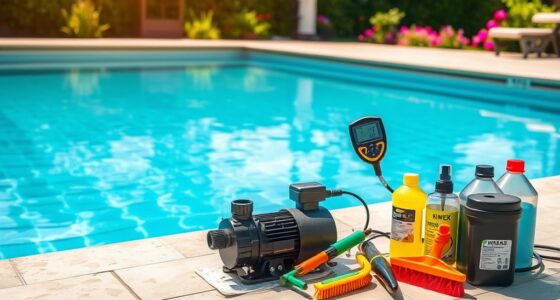
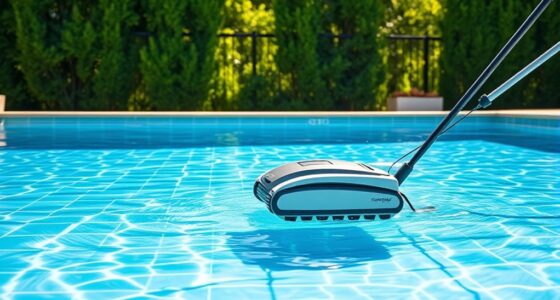
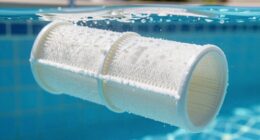
As winter approaches, it’s vital to prepare your pool for the colder months to prevent damage and guarantee it’s ready for next season. The first step is to focus on equipment maintenance. Inspect your pool filter, pump, and other mechanical components to make sure they’re in good condition. Clean out the filter basket and backwash the filter if you have a sand or DE filter. If you notice any worn or cracked parts, replace them now to avoid issues when you reopen your pool next year. Disconnect and store any removable equipment, like ladders or skimmer baskets, in a dry, protected area. Proper maintenance of your equipment now prevents corrosion, freezing damage, and costly repairs later.
Prepare your pool for winter by inspecting equipment, cleaning filters, and storing removable parts to prevent damage.
Next, you need to address chemical balancing. Proper chemical levels are essential to prevent algae growth and the buildup of harmful bacteria during the off-season. Test your water’s pH, alkalinity, and sanitizer levels. Adjust the pH to around 7.2-7.4 and alkalinity between 80-120 ppm. Add a winterizing algaecide to prevent algae from developing over the winter months. Shock the pool with a non-chlorine or chlorine shock, depending on your sanitation system, to eliminate any lingering contaminants. Once your water is properly balanced, add a winterizing pool chemical kit that contains stabilizers, algaecides, and other agents designed to protect your water quality throughout the cold months.
After handling equipment and water chemistry, it’s time to lower the water level, especially if you live in an area with freeze-thaw cycles. Drain the water below the skimmer level to prevent ice expansion from cracking the skimmer or pipework. Use a submersible pump or garden hose to reduce water levels gradually. Once drained, add a winterizing plug to the skimmer and close any drain plugs tightly. This helps keep water out of pipes and equipment, reducing the risk of freeze damage. Additionally, understanding hydraulics can help you more effectively manage water flow during this process.
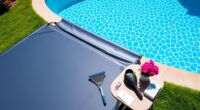
Finally, cover your pool with a sturdy, well-fitted cover designed for winter. Secure it tightly around the edges to prevent debris and snow from entering. Regularly check the cover throughout the winter to ensure it remains secure and free of debris. By following these steps—focusing on equipment maintenance, chemical balancing, and proper covering—you’ll safeguard your pool’s integrity and make the opening process much smoother when spring arrives. Proper winterizing not only extends your pool’s lifespan but also saves you time, effort, and money in the long run.
Frequently Asked Questions
When Is the Best Time to Start Winterizing My Pool?
You should start winterizing your pool when water temperatures drop below 55°F, usually in late fall. Make certain your pool chemical balance is perfect and water circulation is maintained to prevent algae and corrosion. Begin closing procedures before the first hard freeze to protect your pool’s equipment and surface. Acting early helps you avoid costly repairs and makes opening next season much easier. Keep an eye on the weather forecast and plan accordingly.
Can I Winterize My Pool Myself or Should I Hire a Professional?
Winterizing your pool is like preparing a delicate gift—it’s best to handle it carefully. You can definitely winterize your pool yourself with DIY tips, but if you’re unsure or want peace of mind, hiring professional services is a smart move. Professionals ensure proper closing procedures, preventing damage and saving you time. If you’re confident and have some experience, a DIY approach works; otherwise, trust the experts for a thorough winterization.
How Do I Prevent Algae Growth During Winter?
To prevent algae growth during winter, you should focus on maintaining proper chemical balance and algae prevention. Regularly test and adjust your pool’s pH, alkalinity, and sanitizer levels to keep the water clean and inhospitable for algae. Additionally, consider adding a winter algaecide as a preventive measure. Cover your pool securely to minimize debris and sunlight exposure, which helps inhibit algae growth throughout the colder months.
What Type of Cover Is Best for Winterizing My Pool?
For winterizing your pool, you should choose a cover that offers both protection and peace of mind. Solar covers help retain warmth and reduce evaporation, making them ideal for mild winters. Safety covers, on the other hand, provide a sturdy barrier, ensuring safety and preventing debris from entering. Consider your climate and needs, then select a durable safety cover or a sleek solar cover to keep your pool protected all winter long.
How Often Should I Check My Pool During Winter?
You should check your pool at least once every 4 to 6 weeks during winter. During each visit, verify the pool chemical balance remains stable and inspect your equipment for any signs of damage or leaks. This helps prevent algae growth and equipment issues. Keep the cover secure, and monitor the water level. Regular checks protect your pool’s condition, ensuring it’s ready for use when warmer weather returns.
Conclusion
Just like tucking a delicate flower into a cozy blanket for winter, properly closing your pool protects it from harsh elements. I once skipped a winterizing step, and come spring, I faced costly repairs. Don’t let your pool become a lesson learned the hard way. By following these steps, you’re giving your pool a safe winter’s sleep, ensuring it’s ready to splash back to life when the warm days return. Protect your investment and enjoy many seasons of swimming.