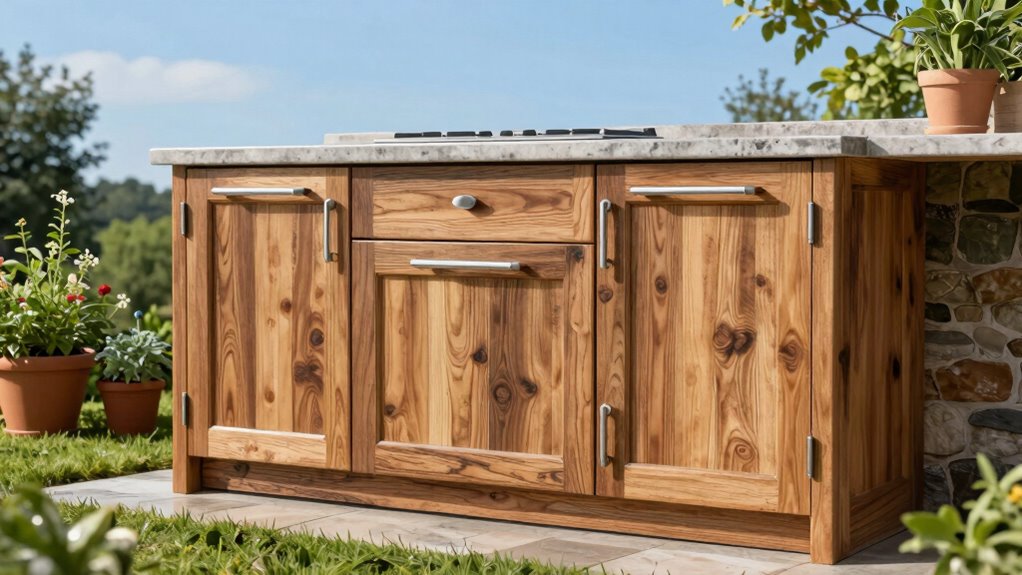

To guarantee your outdoor kitchen cabinet sets last, you need to match the material to your climate. If you live in a humid area, choose weather-resistant finishes or stainless steel to prevent warping and rust. In hot, dry climates, opt for materials resistant to cracking and fading, like composite or resin. Proper material selection, along with regular maintenance, protects your investment. Stay with us to discover how environmental factors influence material choices for durability.
Listen free for 30 days with Audible
Thousands of audiobooks and originals — cancel anytime.
As an affiliate, we earn on qualifying purchases.
Key Takeaways
- Choosing climate-appropriate materials prevents damage like warping, cracking, or rust, extending cabinet longevity.
- Weather-resistant finishes are essential for protecting cabinets in humid or rainy environments.
- Metal cabinets, especially stainless steel, resist corrosion in coastal or humid settings.
- Regular maintenance and protective coatings help preserve cabinet durability in various climates.
- Matching material properties to local environmental conditions minimizes repairs and enhances outdoor kitchen lifespan.
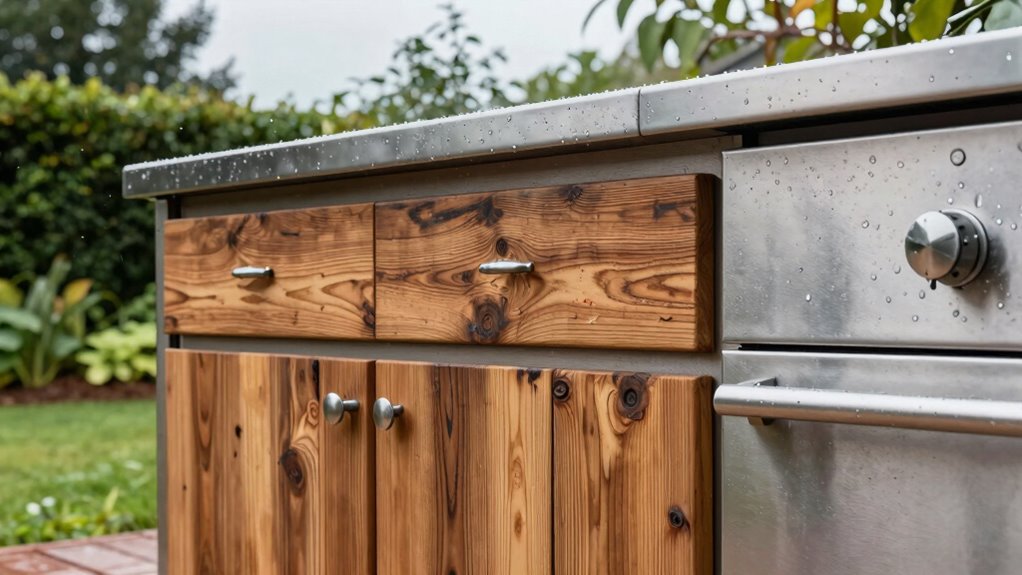
Creating an outdoor kitchen is a great way to enhance your backyard entertaining space, and choosing the right cabinets is an essential step in that process. The durability and longevity of your outdoor kitchen cabinets depend heavily on your material choice—if you select the wrong materials, your investment could quickly deteriorate. You need cabinets that can withstand your climate, whether it’s humid, cold, or hot. The key to lasting outdoor cabinets lies in the materials you choose and how well you maintain them over time.
One of the most important factors in guaranteeing your outdoor kitchen cabinets last is selecting materials that match your climate. For instance, if you live in a humid or rainy area, wood cabinets without weather resistant finishes may warp, swell, or rot. Conversely, in dry, hot climates, some materials might crack or fade without proper protection. Metal cabinets, especially those made from stainless steel, are often a good choice in coastal or humid environments because they resist rust. But even metal benefits from weather resistant finishes that add an extra layer of protection against corrosion and the elements. Proper material selection is essential to ensure the longevity of your outdoor kitchen setup.
Matching cabinet materials to your climate ensures durability and long-lasting outdoor kitchens.
No matter what material you pick, proper cabinet maintenance is critical. Regular cleaning removes dirt and prevents mold or mildew buildup, especially in damp climates. Additionally, applying weather resistant finishes, such as sealants or specialized paints, can extend the life of your cabinets. These finishes protect the material from moisture, UV rays, and temperature fluctuations, reducing the chances of damage and maintaining their appearance over time. Maintenance is not just about cleaning; it’s about proactively safeguarding your cabinets with protective coatings that can be reapplied as needed. Proper maintenance is essential for ensuring your outdoor cabinets stand up to environmental challenges and last longer.
It’s also worth noting that some materials require less upkeep than others. High-quality composite or resin cabinets, for example, often come with built-in weather resistant finishes that need minimal maintenance. They resist warping, cracking, and fading, making them ideal for outdoor kitchens in challenging climates. However, even these low-maintenance options benefit from occasional cleaning and inspections to catch any early signs of wear. Choosing weather resistant finishes is crucial in ensuring your cabinets withstand environmental challenges and last longer. Additionally, understanding the specific environmental factors of your location can help you make more informed decisions about the best materials and finishes to use. Incorporating climate-specific considerations into your planning can significantly enhance the durability of your outdoor kitchen.
In the end, outdoor kitchen cabinets only last if the material choice matches your climate and you commit to ongoing maintenance. Investing in cabinets with weather resistant finishes suited for your environment ensures your outdoor kitchen remains functional and attractive for years. Proper material selection combined with consistent cabinet maintenance creates a space that’s not only beautiful but also durable, so you can enjoy your outdoor cooking area without worry.
stainless steel outdoor kitchen cabinets
As an affiliate, we earn on qualifying purchases.
As an affiliate, we earn on qualifying purchases.
Frequently Asked Questions
How Often Should Outdoor Kitchen Cabinets Be Maintained?
You should maintain your outdoor kitchen cabinets at least twice a year. Regular upkeep includes cleaning with mild soap and water, inspecting for damage, and applying weather-resistant finishes to protect against the elements. Additionally, consider outdoor pest control measures to prevent insects from damaging the wood. Proper maintenance keeps your cabinets looking great and extends their lifespan, especially if you choose materials suited for your climate.
Can I Customize Outdoor Cabinet Designs Easily?
Customizing outdoor cabinet designs is straightforward when you explore a variety of options. With flexible material choices, you can tailor your cabinets to suit your style and needs. Many manufacturers offer custom design options, allowing you to select finishes, colors, and configurations that fit your space. Be bold with your ideas, and work closely with providers who prioritize precision and personalization, ensuring your outdoor kitchen is uniquely yours.
Are There Eco-Friendly Material Options for Outdoor Cabinets?
Yes, you can choose eco-friendly materials for outdoor cabinets. Look for options made from recyclable materials like bamboo or reclaimed wood, which reduce environmental impact. You can also opt for biodegradable finishes that break down naturally over time, minimizing pollution. These choices not only help the planet but also add a unique, sustainable touch to your outdoor kitchen. Just make certain the materials suit your climate to maximize durability.
What Is the Average Lifespan of Outdoor Kitchen Cabinets?
They say “you get what you pay for,” and that’s true for outdoor kitchen cabinets. On average, with proper material durability and weather resistance, your cabinets last 10 to 20 years. Choosing the right materials—like stainless steel or treated wood—ensures they withstand the elements and stand the test of time. Regular maintenance and climate-appropriate choices can considerably extend their lifespan, making your investment worthwhile.
How Do I Prevent Mold and Mildew on Outdoor Cabinets?
To prevent mold and mildew on outdoor cabinets, you should regularly clean and dry the surfaces, especially after rain or spills. Use mold prevention products or a mixture of vinegar and water for mildew control. Make certain there is good airflow around your cabinets and avoid excessive moisture buildup. Applying a protective sealant suited for outdoor use also helps keep mold and mildew at bay, extending the lifespan of your outdoor kitchen setup.
Conclusion
Choosing the right material for your outdoor kitchen cabinets isn’t just a smart decision — it’s the secret to turning your backyard into a culinary paradise that withstands even the most brutal weather. When you match your cabinets to your climate, you’re safeguarding your investment and creating a stunning, long-lasting centerpiece. Don’t let subpar choices turn your dream into a nightmare. Pick wisely, and watch your outdoor space become the envy of everyone who visits — a true masterpiece that lasts a lifetime!
NFL season / tailgating Picks
team gear
As an affiliate, we earn on qualifying purchases.